Episode Transcript
[00:00:01] Speaker A: Welcome to Energy in the Room. I'm Katie. Join me as I sit down with the inspiring voices shaping our energy future. Together, we'll share real stories, big challenges and honest advice from those leading the transition.
Let's dive in.
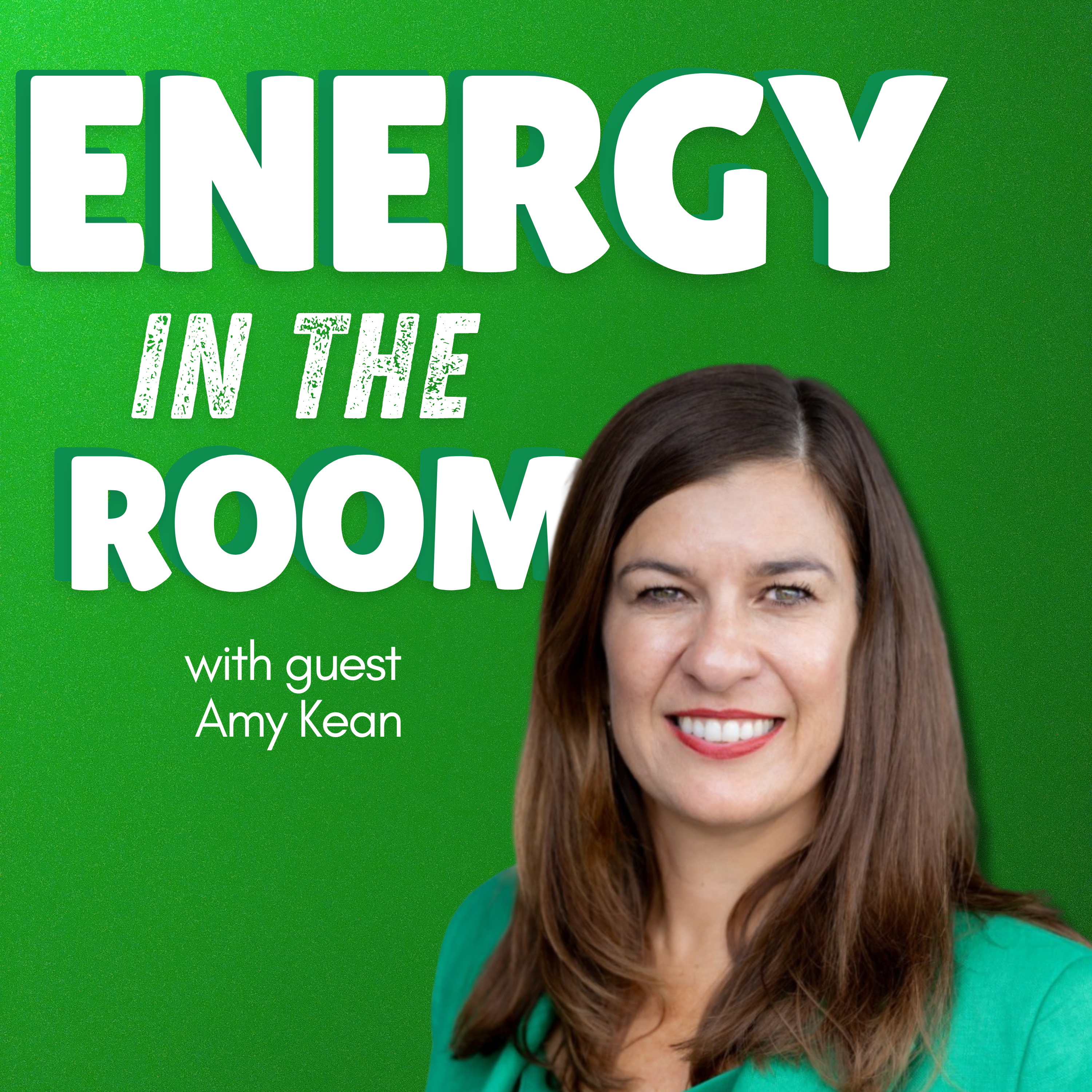
So today our guest is Amy Keen, partner and co founder at Stride Renewables.
Amy has been working at the intersection of the energy markets, policy and project delivery for more than 25 years across Australia and overseas.
Today we're going to talk about Amy's take on policy reformation implementation, your journey and Stride Renewables, as well as women in renewables. So welcome, Amy.
[00:00:52] Speaker B: Thank you, Katie. It's a pleasure to be with you today.
[00:00:55] Speaker A: Thank you. Likewise.
So let's start from the beginning. What drew you into renewable energy and policy and also what's kept you passionate through the ups and downs of the sector?
[00:01:07] Speaker B: Yeah, as we're just saying, it's 25 years now, so I'm really lucky to have worked in the sector for that long. I had a science background at UNI and then quickly got into energy trading, actually, as a consultant and renewables was a very different concept. And I just remember studying the science of climate change in, in the 90s at uni and then New South Wales had to set up the Sustainable Energy Development Authority, which was a very elating, thought provoking organization, was very much ahead of its time and it was just a light bulb moment for me. That's what I wanted to do. The fact that we could have government supporting energy from renewable sources, it was so different to what the prevailing energy source was and we could actually harness the sun back then. So I went for three interviews before I finally got a job at Cedar and stuck with it. And I kept saying, I'm not going away, give me a job. And I had some wonderful mentors and sponsors there and then continued to work in energy, going between generators and industry associations and doing work overseas with NGOs as well as.
So, I mean, I still love it. I often think every year I sit down in January and think, what do I want to do? Is this I want to do?
But I feel like it's, I mean, it's such a complicated and complex industry and it's never boring and I'm always learning and I feel like I can constantly, you know, there's always stuff to read and I'm never across anything so I'm can't think of anything else I want to do. And right now is such a fabulous time. It's so fascinating and the economics are on our side. The public's on our side, I'm very motivated as to where we are because it's so hopeful compared to what I look back 25 years ago when the economics wasn't there, it was bonkers.
It was kind of sci fi to now having every home almost. With solar, it's a fundamentally different place. So yeah, that's a great. I'm very proud of what I do and I love it. And certainly encourage young people to join the sector.
[00:03:28] Speaker A: Yeah. And I bet you have seen such a change over the last 25 years. Like I think if you went out onto the street 25 years ago and you asked someone what is solar? Or even. Yeah. Anything that they would have absolutely no clue what you're on about.
[00:03:42] Speaker B: No.
[00:03:43] Speaker A: Do you think is that fair to say?
[00:03:44] Speaker B: Oh, absolutely. As I said it was, you know, everyone used to think of the ozone layer at the time as like no greenhouse. It's different.
We solved the ozone problem effectively. So that gives me hope.
And yeah, we had one system in the government building that was a solar system and we had delegations almost weekly coming to look at it because it was so rare and fascinating and where we are now.
It constantly blows my mind how far we've come, but also obviously how far we have to go. But that's so possible because the change has been extraordinary and yeah, it's great to go on that journey.
[00:04:27] Speaker A: Yeah, no, incredible. And you've worked across both government and private sectors and sat in a few different boardrooms.
That's a huge mix of experience. And how do you think that's shaped the way you approach the energy transition?
[00:04:45] Speaker B: Yeah, I really think it's given me enormous strength, but also much more a practical approach to the complexities, seeing things from different perspectives. And I think it's very healthy for people's career developments to get that perspective.
I think I understand government is incredibly challenging and my utmost respect to those that work in government because the operating environment is really hard and people are very quick to criticize government without really appreciating often how much work goes into a policy to get it over the line. It's just, it's really tough. But then equally so, you know, the private sector also has its own challenges and you know, the speed and the pressure of making things financially viable.
And of course everything comes down to people so appreciate and just, I guess one of my. Yeah, I really value the importance of collaboration. Collaboration's key.
And no one can do it alone. We need civil society, we need government, we need business. Everyone has a role to play and a different Role, and that's really important. So I'm pleased to have seen all different angles. And right now, with Stride as a business, we work across all sectors, and again, bringing those groups together is where magic happens.
[00:06:08] Speaker A: Yeah, no, I agree. And that leads me nicely onto my next question about Stride Renewables.
Talk to us about Stride and why you founded the company.
[00:06:21] Speaker B: Thanks. Yeah, I mean, Stride is a small boutique advisory firm. There's almost 20 people in the company now, so we've grown, which has been a privilege to watch that happen over six years. With my co founder, Luke Osborne, we set up Stride to bridge the gap between the government and business and really accelerate projects. So bring them from the public to the paddock and work and make sure that particularly social license is dealt with. We saw a gap between doing projects well and doing them quickly and actually generating clean megawatts in a.
In a. In a smart way.
So, yeah, it's been. Been a lot of fun and. Yes. Still enjoying it.
[00:07:12] Speaker A: Yeah. Amazing. Incredible.
And I think like a core part of the services that you offer with Stride is around policy. Right. And how to navigate that.
[00:07:25] Speaker B: Yeah, yeah, that's. That's right.
Understanding policy from a. From a private sector perspective and making sure that works. But we're also really lucky to do a lot of work with government and helping them understand what's happening on the ground, because often, I often talk about kids in a playground who speak different languages. You know, they kind of talk at each other, but don't really communicate. And I used to see that in government, it was just a complete misunderstanding and that communication's key. And in fact, a lot of the work we do is strategic communication, because unless you're able to communicate to the right audience, things are lost in translation and then opportunities are missed.
And bringing people into the mix as well is really important.
This isn't just an engineering problem, this is a people problem.
[00:08:20] Speaker A: Yeah. It comes back to collaboration. And it is down to the people.
[00:08:25] Speaker B: Absolutely. They're most important and also the hardest problems that I think exist in the energy transition and often forgotten about the same. We talk about communities. It's always about making sure that people and place are at the center.
[00:08:38] Speaker A: Yeah. Yeah. And I think it is. People always talk about the complexity of our sector and the amount of different stakeholders that need to be looked after, heard, and the influence that those stakeholders all have on the sector.
And I think a key point of contention is around policy and how.
How much it is.
I don't want to sound too negative, but how much it's hindering Progress.
So what's your take on how policy is the state of policy right now and how it translates into the real world?
[00:09:24] Speaker B: Yeah, I love policy and it's really important to get it right. Cause it makes and breaks things. And there's always a gap between what it looks like on paper, in an academic sense, and what it looks like on the ground.
And yeah, I guess that pertains to what we were talking about earlier. You've got to see things from both perspectives. And I think a lot of the policy at the moment is very much centered on the. There's often a strong governance focus, which is really important when working across government, particularly state and federal and local government. They're all critical to energy infrastructure projects. But yeah, the governance cannot often trip things up. We get too caught up in that.
And I think the other element of it is I'm a real believer in letting the private sector innovate, not government. Government is too hindered by its natural incumbencies, whilst the private sector has the flexibility to be nimble, be quicker and innovate.
And so you've got to let them do that. So by putting out a carrot or a.
A goalpost is much more effective than using a stick and dictating how they do things. And I think energy policy's shifted a lot in the last really couple of years of particularly using tenders and market mechanisms to allow in the private sector to tell the government what they'd like to do and then assessing them on that. Which is much better than what used to happen, particularly through the planning process where it was, you must do this and the stick approach, we can never guess or anticipate what's going to happen. And also every community is different, so there's just not one size fits all. And to that point also, I think I'm a strong believer that the private sector is a lot better at talking to the communities and working with the communities, forming that human relationship. And it has to be done human to human. I don't think consultants are the best people to do it either. It has to be done by those that are actually building the infrastructure.
And, you know, to that point, policy, anything that looks through a single lens is tricky. So anything that looks just through the economic lens, you have to look through all of them. And some of the new, you know, the current reforms that are looking forward are very much just the economic lens. But unless you really put look through the community perspective, look through the engineering perspective, that trifecta, I think, of economics, engineering and community is critical and it's hard, it's hard to navigate. It's really hard. But I think often, and that's why you need diversity of people in the room as well. Like diversity of all sorts of people, like obviously genders, but also of training, background, training, everything to think about the perspectives. And it's that narrow focus where policy often fails practically on the ground.
[00:12:30] Speaker A: Yeah. And I think the key word is perspective and I'd say that's why you'll probably have this kind of such a holistic approach because you have got experience from these different areas and you have such different.
Your, your perspective is well rounded.
Yeah.
And I suppose like going into the diversity piece. Actually, no, I'll go back, I'll go back. So I don't want to sound too negative, but going back to like regulatory barriers and people feeling like progress is slow, is slowed down by those.
What do you think that like a real fit for purpose energy market will look like in 2030?
[00:13:21] Speaker B: Yeah, I mean, first of all on regulatory barriers and slowed down, I mean we're talking really, I'm talking large scale infrastructure. And yes, there are absolutely barriers, but also there's good projects and particularly good developers will do a good job of navigating those, I think. So we've got to be careful about that. That you do need to have boundaries for a reason and that that can get overlooked sometimes. Saying that there absolutely are, there are some strong regulatory barriers. Obviously planning grid is a big one commute. But community, I see a lot of examples where it's done really well.
[00:14:03] Speaker A: Yeah.
[00:14:03] Speaker B: And I'm seeing that more and more. So now where the bar is being lifted and certainly the capacity investment scheme I think is a really good policy in that sense of lifting the bar. And I'm seeing a lot of incredible innovation on the ground that's driving things we've never seen out of energy market before. Local manufacturing, it's a new factory that's being built in western Sydney at the moment just to service wind turbines. I mean that's incredible.
[00:14:28] Speaker A: Oh really?
[00:14:28] Speaker B: That's great news. And then I've seen lots of work with, you know, first nations where we're actually sharing the benefits in a real tangible way, where there's equity sharing going on now we're doing training with local tastes, the local communities having that direct benefit. And when that happens, the sentiment shifts and we need that across the nation. So look, I'm getting waylaid, but what is, you said, what is good market mechanism? What does a future policy look like?
I mean it has to be a longer term than what is happening at the moment.
And to that avail I'm think long term storage solutions are really important.
I'd certainly like to see more longer term support for pumped hydro and that really requires government to think about that as any large infrastructure does certainly.
And diversity of technologies too. And often I think the energy sector almost cannibalizes itself by focusing on one technology over the other. And again we can't predict where which technology is going to become more economic and more efficient and meet the needs. But I don't think anything will. So I often think about it like an ecosystem, a forest. You just need everything in it and we can't criticize one thing over the other. And there's no silver bullet here either.
And it's not, it's not easy. Just like any, any massive societal transition, it's really complicated.
[00:16:09] Speaker A: Yeah. And there's no quick fix.
[00:16:12] Speaker B: Exactly. Katie.
[00:16:13] Speaker A: Yeah. And it sounds like you're of the opinion that we are doing the right things now. Like the things you just said about with TAFE and getting the right training in place and looking after the people ecosystem which I guess is like the next thing that I want to go on to is around like diversity in the sector and how, and it is always hard in all industries. Right. Of like you can talk as much as you like about diverse workplaces but how do you actually implement that? And yes, it's a collaboration thing and everybody needs to do their bit. But yeah, what, what advice do you have around like what people employers can actually be doing to improve the diversity of their teams.
[00:17:08] Speaker B: Yeah, I mean I guess as somebody who has a small business, a couple of things I often think about. One is, I think it's often human nature to employ people the same as you.
In fact maybe we had about 90% women in our company.
So I need to actively diversify to other genders and people as well. But so it's thinking about the value of opposites in teams. I'm a real and different roles and people who think differently and have different ideas. Again that's when you have the color and that's really important because otherwise you get group thinking or create your own echo chambers. So that's something you have to be actively aware of and it's, it can be uncomfortable choosing particularly personalities that are different to your own in terms of, you know, energy. We often talk about gender. So I, you know, for me I'm a, you know, I've got young children and worked through raising them.
Some of the things that I really value now is the Ability to work from home. So at Stride where Flex we're flexible with our working and we've run the company from remotely with people across four states now. And there are things you can do and we're showing it continues to work. I think you have to compensate for it. But we make sure we go above and beyond to check in and have activities online.
We have Wellness Wednesday where everybody takes a chance to. Sometimes we do drawing together or just, you know, things outside of the box to connect as humans. So addressing that we're not in the office but for parents that's a game changer.
[00:18:54] Speaker A: Yeah.
[00:18:55] Speaker B: And being for me, I just value that so much. That ability to work hard, deliver, but sometimes in hours that a little absolutely unconventional. I think also on that point the energy sector having public events at lunchtime is really important.
Simple things like they often have women in energy breakfasts early at 7am and that doesn't work for.
[00:19:19] Speaker A: Particularly for parents, the kids to school.
[00:19:21] Speaker B: No. Or afternoon drinks doesn't work either. So yeah, lunches is a really appropriate time in my opinion.
And then I think it's great to have for young people everyone because we need young people and we need diversity to actively find mentors and then equally so sponsor as more senior leaders sponsor junior people. And I was lucky enough to have a number of sponsors throughout my career that I'm very grateful who have pulled me through and taught me. And not just mentoring, but actually sponsoring people.
[00:20:06] Speaker A: Yeah. When you say sponsoring, what do you mean?
[00:20:09] Speaker B: I think actually advocating for them and holding and speaking up and using their name in meetings and giving them the job opportunities and backing them as individuals in organizations is slightly different to mentoring. Mentoring is more of. It can be more of a connection to somebody you can't directly help except through coaching. While sponsoring is identifying people with PT for various reasons support.
[00:20:42] Speaker A: And if you think about it from another perspective, if you were someone that wants to be a mentor or wants to sponsor people, have you got any suggestions on how you can kind of put yourself out there as someone that or even if you're just in conversation in a women's lunch like any advice on how people can approach that?
[00:21:07] Speaker B: Certainly mid level I think is often a forgotten tranche. Like people focus on the really young people out of uni or junior early level careers. But it's often the mid level that's particularly diversity. Junior levels it's evened out. But it's going from mid to senior levels where you have that valley of differential.
I guess diversity is lost.
So I think just being bold and brave and frank and offering that support too.
[00:21:39] Speaker A: Yeah.
[00:21:41] Speaker B: I'm always trying to encourage, particularly women who's something I care about in energy where it hasn't been balanced to be bolder and speak up. Because often I think the women are more timid and naturally want to have everything sorted before they'll go for the next job or do a public speaking. They want to be an expert before or they'll speak publicly or.
But it goes both ways. I had a young man that I'm proud to have mentored and invited him to a boardroom lunch and he said, oh no, I'm not seeing you enough, I'll invite my boss. I'm like, no, no, I asked you, I didn't invite your boss. I don't want your boss to come. I want you to come.
[00:22:24] Speaker A: Yeah, no, I think that's definitely a thing.
I think if I would like. Not that I would be in a position. Well, there you go. That's me being self deprecating again. Like, I think women tend to maybe think like, oh, I don't think I'm in a position or senior enough or have achieved enough to be a mentor. But actually I think collaboration again and the more you people connect and give each other advice and go out of their way to support one another, the more everyone's going to benefit.
[00:22:59] Speaker B: Yeah, I think that's a really good, really good point. And also as you time becomes more limited as you become older, often by like for me, I'm at a stage where time isn't my friend.
So often I'm asked to meet with junior people whilst I will delegate that to mid level people in my team to then meet with somebody because they're well placed to have those coffees, have those lunches.
So it's sharing that as well and teaching them how to mentor rather than me saying no, who can do that and learn from that experience as well. So I don't think a mentoring thing should be a senior leadership role. But perhaps what you're saying, Katie, it's like bringing on. Everyone can do it. Yeah, almost like a village.
[00:23:51] Speaker A: Yeah, yeah, like that.
[00:23:54] Speaker B: Yeah, yeah.
[00:23:55] Speaker A: No, you read between the lines there of what I was trying to say. But absolutely what I mean. And it's like, yeah, moving the needle where you can and just I guess passing on your wisdom.
[00:24:05] Speaker B: Yeah, that may have come out a bit wrong. I'm too busy so we might have to look at that one.
[00:24:12] Speaker A: Okay. And you have been as like as has come across so far as well, you've been a visible advocate for women in the energy sector, what practical steps do you think make the biggest difference in getting more, more women into decision making roles? Like maybe, and I am talking like senior leadership now, like in boardrooms etc.
[00:24:38] Speaker B: I think quite as are really important for getting women into leadership roles.
That helps and targets. I am an advocate of that.
We've seen what happens in political parties when that doesn't happen, it doesn't serve anyone.
[00:24:54] Speaker A: Well, that's really interesting that you're happy to say that because I think.
I agree but I think a lot of people would say, well it's not just a tick box exercise and if you have quotas, people are just doing it for the sake of it. But I, I'm of the same opinion of you as you.
[00:25:11] Speaker B: Well, particularly the senior levels, I mean look at the statistics and women on boards is so low and women in executive levels is so low and there's, you know, there's many reasons why that's the case but you have to have that diversity.
I was on a board, a senior board and I brought my daughter along, who was 11 at the time because she was sick and I didn't want to miss the meeting. So she's, you know, they've often been, that's happened.
Well certainly since they were born, I've dragged them to meetings and she was very good and sat there and then one of the, it was one of the wives of one of the men were there and was shocked that I was on the board and it was very clear and I said to my daughter, what did you think? She said, they assumed you were the tea lady.
[00:26:09] Speaker A: She picked up on that.
[00:26:11] Speaker B: Yeah, yeah, yeah. And you know, it's like, yeah, but
[00:26:15] Speaker A: I'm not, I'm not the tea lady.
[00:26:19] Speaker B: And it's, you know, things, but things are changing but we need to keep that things have shifted a lot and we need to keep bringing up women and that's why. Yeah, having, we have to have actively address it because it's a better outcome for everyone and the same goes for different. It's not just gender, it's diversity with first nations people with minority groups, different ethnicities.
[00:26:46] Speaker A: Yeah.
[00:26:47] Speaker B: And it does result in better outcomes and to your point, perspectives and decision making.
It's not healthy to have equally. So a boardroom, just women of my age, 50 year old women around the table isn't going to work either.
[00:27:07] Speaker A: No. Agreed.
And then finally, what advice would you give to young women starting out in the energy industry?
[00:27:19] Speaker B: First of all, learn as much as you can. So don't Rely on, you know, academic training or work, really become an expert. And that requires deep reading. And there's, there's. There's so much information out there. But become an expert in a particular.
Pick something you love and that you care about and then take your own initiative to become a deep expert that will be valued. And then don't be shy about sharing your expertise through different means. And your podcast is a great example. But then through communication is changing so quickly. So participate in the debate through different communication channels and take the opportunity then to start to, if it requires public speaking courses, do media training.
There's so many events now that you can start to build your communication skills, even if it's a lunch and learn.
We have a lunch and learn once a week in our organization for junior people to start to practice communicating and presenting. I think also finding a mentor and a sponsor is important to help you navigate that work and make sure you're in an organization that takes care of you and is good with good people, because people matter. And working with good people is everything. So you don't need to tolerate substandard cultures because if you're happy and you enjoy it, you'll thrive.
[00:28:53] Speaker A: That's a really good bit of advice.
Yeah, that's really good. And also what I'm getting from that is put yourself out there, put yourself outside of your comfort zone and connect with people as much as you can.
[00:29:08] Speaker B: Yeah, yeah, that's a really good point, Katie. I think that connection and networking and my network's probably my. One of my greatest supports and strengths and friendships and through the good times and the bad times, and we all go on that journey. So, yeah, build your own personal network through those incredible. All the young women in energy. Young engineers in energy.
AIE has some great events. Engineers Australia. There's so many networks where you don't and don't rely on your boss or manager to take you to those events. I think often people focus on conferences, which is. That's fine and that's important, but there's many other ways to build your own personal network that I think is critical for your career because that's how you find opportunities.
[00:29:56] Speaker A: Are there any platforms that you can suggest that people can use to find out about these events?
[00:30:06] Speaker B: Yeah, Australian Institute of Energy is very good. Engineers Australia.
Women in Energy event, and then some of the.
There's some great solar networking events. Nighttime solar in the pub.
[00:30:24] Speaker A: Yeah, yeah, there's.
Yeah, a few of those drinks events, especially in Sydney, I think.
[00:30:34] Speaker B: Yes, that's right. Sydney's great for it, but I think it's really important.
Again, be brave and turn up and put on, you know, put yourself out there. And it takes guts. It's really not. It's much easier to stay at home and watch Netflix than to go to an event potentially by yourself. But ideally, I guess, if you can find yourself a wing person.
[00:30:56] Speaker A: Yeah, I went to something the other day and I went on my own. There's a room full of people. I wasn't sure if I'd know anyone there. And I'm a recruiter, and as soon as you say you're a recruiter, people's vibe does change a bit.
But, yeah, it was really outside my comfort zone, but I did it and it was great.
[00:31:14] Speaker B: So well done.
I love the NIDA courses, NIDA communication courses. And they're great at teaching people how to have presence and enter a room and sometimes fake it.
[00:31:29] Speaker A: Yeah.
[00:31:29] Speaker B: Even if you don't feel comfortable, like no one enters a room with people you don't know and feels braves.
[00:31:37] Speaker A: Yeah.
[00:31:38] Speaker B: But you need to form those networks.
[00:31:40] Speaker A: Yeah, no, definitely. Well, thank you so much, Amy. It's been an absolute pleasure. And yeah, we'll see you again soon.
[00:31:47] Speaker B: Well, thanks, Katie, and thanks for your work and this podcast.
It's great to have young women in energy like yourself that has put a
[00:31:55] Speaker A: smile on my face. Thank you,
[00:32:00] Speaker B: Sam.