Episode Transcript
[00:00:01] Speaker A: Welcome to Energy in the Room. I'm Katie. Join me as I sit down with the inspiring voices shaping our energy future. Together we'll share real stories, big challenges and honest advice from those leading the transition.
Let's dive in.
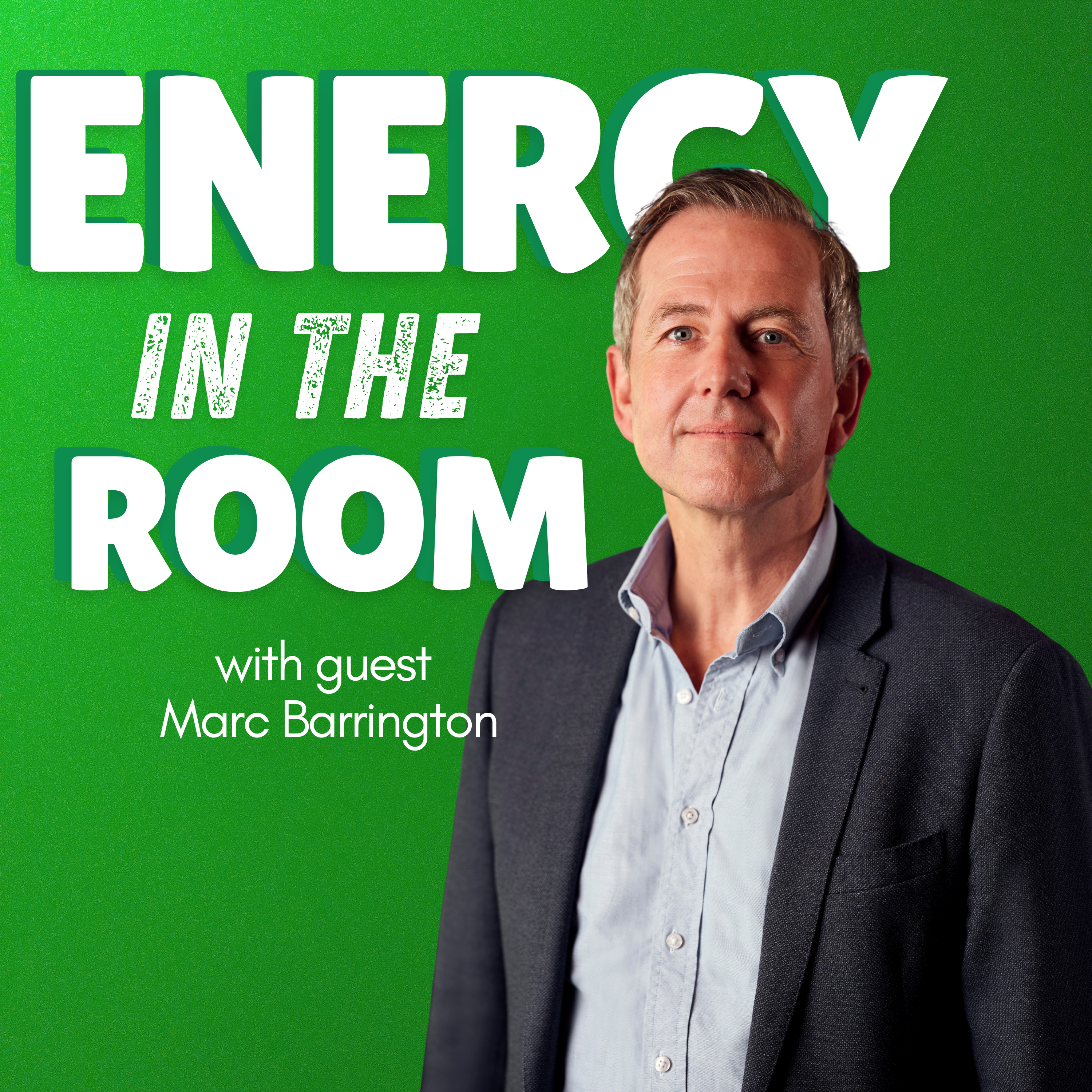
Today I'm welcoming Mark Barrington, a seasoned leader with decades of experience across renewables, carbon market, retail and decarbonization strategy.
Mark is currently the General Manager of new Markets at Alynta Energy. Hello, Mark.
[00:00:34] Speaker B: G', day, Katie. How are you?
[00:00:35] Speaker A: Very good, thank you. How are you doing?
[00:00:38] Speaker B: Not too bad. Although the decades of experience does make me feel a little bit older.
[00:00:43] Speaker A: I had a feeling you might say something like that.
And like, for those who aren't familiar with your background, can you just tell us a bit about your background and how you got to where you are?
[00:00:57] Speaker B: Yeah. So I spent the 90s working at NM Rothschild for the most part and it was on the precious metals desk there and then moved into energy in the early 2000s. So 25 years now of experience in energy across the value train, from retail and trading, development operations. So I guess bring a unique blend of commercial and technical leadership to the table.
A lot of my work has been building new ventures inside large businesses, which is interesting.
It has both the challenges of, I suppose, entrepreneurialism but also fighting for oxygen inside a larger organization.
But I find that, I find that really interesting actually, that Nexus or the fight that goes on within inside businesses and needing to get stakeholders really engaged in what you're doing.
[00:02:02] Speaker A: Brilliant. And so going back to when you started in the industry, was it a planned entrance into the market or was it more accidental?
[00:02:15] Speaker B: Yeah, it wasn't accidental, but it wasn't necessarily planned either.
I was looking at the, you know, the growth of the energy sector in the us, the UK and then how Australia disaggregated its energy markets, you know, all through the mid to late 90s. And it always really interested me and I suppose more from the fact that I don't. I never really saw myself as wanting to be a trader that was just trading numbers off a screen. I really wanted to be more involved in, you know, the, the commerce of things. And I saw energy as being a good way to take the skill sets that I had in, in trading environments of precious metals and commodities and bring them, bring something new to the table in managing electricity risk and, and, and then really build a new career in, in the Australian energy space.
So I started in trading at, at a really interesting time at AGL Energy because typically it was the gas company, it's the New South Wales Gas company that only when I started, only just acquired.
[00:03:28] Speaker A: What year was this?
[00:03:30] Speaker B: I'm going to say 2001, but, but the back end of 2001. Yeah. So they just, just acquired ETA power and, and, and you know, built up an electricity book in South Australia, but they'd also been involved in New South Wales. So I almost from day one got really hooked on the complexity and the consequences of decisions and you know, I guess I really grew into roles where strategy meets execution. That always really excited me.
[00:04:04] Speaker A: And yeah, I think for those who are listening, something that, like the main theme of this podcast I'd like to be around like your growth and advice for people that are growing in the industry, advice for people that are in leadership or want to get into leadership.
So given that what is like a pivotal moment in your career that you can draw upon a bit of a, something that struck a chord with you, whether that is a failure or a success.
[00:04:40] Speaker B: Yeah, I guess having near failures is always a really good, good way to learn.
So I was leading a major asset project that was facing delay and possibly failure. It was a large asset, but on a customer site. So you know, you had that balance of not only needing to get the project right, but the customer at the same time. You know, know, potentially the, the, the impact to them was, was impacting their, their day to day operations. So you know, that experience, you know, I had to unify both the technical, the commercial and the legal aspects in my own company with our contractors and, and with the customer.
And I suppose that was the, that was the first time where for me there was a recognition that leadership is really about getting people aligned to share your vision and not just about managing tasks. Tasks are important and the quality of how you carry those out really is.
But you can't do it alone and you've really got to build this coalition of the willing.
[00:05:51] Speaker A: Yeah, yeah, yeah.
And have you got any advice on how you.
I guess like, yeah, is do you think that's a natural thing that people can be like a, a leader and a visionary and those types of people that just get people behind them naturally, or do you feel like you had to hone that skill set and have you got any advice around that?
[00:06:18] Speaker B: There are certainly people out there that, that just have a natural charm and charisma and it just comes naturally. But that's not me and anyone that works with me. No, it's something that I know I need to grow and I always need to develop.
I think you need to identify the need. I remember actually one of My at the early stages, where the 360 leadership reviews started, early 2000s was the first time I'd seen it.
I remember the first bit of feedback I had was that, you know, my peers, subordinates and my managers saw me as being high on red, you know, and red are the more pushing things through characteristics, you know, driving forging ahead without listening to others.
And I really, you know, took it on that I had to reduce those and build more of the collaborative styles. So, you know, I don't think it's, I don't think it originally came naturally to me, but with necessity being the mother of invention, you know, that's just almost the only way you can work. And one of the things I've found interesting is culturally Australians operate differently to Americans, to Europeans, certainly to folks in Asia, we are much more collaboratively led.
Whereas, you know, in Asia they expect a more directive style of leadership and kind of in Europe it's somewhere in between. But yeah, the combative style leadership in Australia won't work.
And so, you know, you really need to adapt.
[00:08:02] Speaker A: Yeah. So yeah. Is it called the Myers Briggs test to all those personality questions and you. Yeah. Red, blue, yellow and green, I think are the main colors, aren't they?
[00:08:16] Speaker B: It's funny, I've been talking with our talent team actually and I noticed that they're coming back into, I would say fashion. That sort of devalues it a little bit. But I think getting a deeper understanding of the folks that you're going to be employing and working with and understanding what their motivations are is really important.
And, and certainly for me I'm really looking for those when I recruit for folks.
[00:08:40] Speaker A: Yeah, I think some people think those, those kinds of tests are a bit of a waste of time and you should get to know the people in your team and things like that. But I think there is definitely a use for those kinds of reflective tests.
Test is probably the wrong word, but I think. Well, yeah, when you're building out a team, I don't think pre interview they should be done. But I think, you know, once someone started in your team and you're having a, you're learning to work together, I think understanding the way people work and their personality traits is really helpful.
But so more of the story is you're naturally a driver, a red energy person as they say, and you've worked on that a little bit to be more collaborative.
[00:09:29] Speaker B: Yeah, I think so. Yeah, I hope so.
That's what people would say.
[00:09:35] Speaker A: Yeah, we'll speak to your colleagues afterwards.
And I think We've had this conversation a little bit before in previous talks.
I want to know what like drives you in working in the industry and your position now, like what are you passionate about within the sector? I know you're not particularly, for want of a better phrase, an eco warrior or a mission led person. So yeah, what, what are you passionate about within the sector?
[00:10:05] Speaker B: Yeah, to some respects, you know, let me just deal to that. Just to start with. I really loathe the, the tribalism sometimes that we get in our, in our space, you know, that you are, if you're for one, that means automatically you have to be against the other.
So what I enjoy, what I'm passionate about is the idea that energy is a public need. It's a necessity, whether it's mums and dads or whether it's industry and it touches every part of our life. And so the idea or the challenge of making it more reliable, more affordable with a lower emissions profile, and it's all three and not just one, is imperative.
And she started at the outset. I've seen altruism has a very short shelf life in the political space, in the energy space. And I saw it a lot in the lead up to 2007, really high intention from companies and governments to deal to decarbonization.
And then a lot of that just got lost during the gfc. And it got lost because, you know, people go straight to what matters most to them, their families and how they can support their families.
And I think I've seen another cycle occur, you know, just in recent times where we started to see again this sort of pushback on all decarbonization as being the main topic. And, and I think what will be long lasting for the sector or a better way for the sector is to focus on trying to get all three right.
And I think that's possible. And that really aligns with me. You know, I'm pragmatic, I'm not ideological and I care about real outcomes.
And you know, what drives me is certainly the role I've got at the moment, which is being able to lead a team that's working with business in Australia and helping them to decarbonize, but to make their own operations more energy efficient. And that's a cost saving, but there's also decarbonization saving as well or decarbonization benefit. And that's what drives me.
[00:12:32] Speaker A: Yeah, yeah, I think you've kind of answered it there. But I was going to say, like what?
Say you're very pragmatic. So what kind of challenges really get you going. Like yeah, what's something that's going to keep you up at night? Whether it's like a day to day challenge that you have with the team or is it a bigger picture thing with the wider industry?
[00:12:56] Speaker B: Well, look, I sleep very well but I like sort of multi variable messy challenges and sort of always have done and I guess gravitated towards it in, in my career I, I've, I've liked working in environments that have been untested before. So you know, I was an earlier, early arrival, if you like, into carbon markets.
You know, really saw the, the potential for environmental markets to, to grow and, and the benefit that adding liquidity does to that space. So I really saw that early on and I was able to take what I learned in the precious metals markets in the 90s of working at Rothschild which was a great company in that it supported mid tier miners and trying to run their hedging programs in the Asian market.
The way to it was very hard to access liquidity. So where did we go? We went to the Tokyo Commodities Exchange and other markets to try and get that liquidity and I saw the benefit, benefit that gave both the miners but to our company at the bank at the time and likewise, you know, promoting liquidity in environmental markets I think really helped.
And so I think for you know, my career being able to look at niche opportunities and trying to expand them, I've just always found really, really interesting and building teams that, you know, where I can help them navigate some of the uncertainty because you know, it's a huge, the energy transition is a huge task but just so interesting and just so much opportunity both for technologies, for the development of technologies whether it's, you know, generated inside our own country or from overseas, but even just career wise for people, you know, I can't think of another sector where you've got regulatory, environmental people, you know, being.
When you go and talk with landholders that are looking at what does it mean to have wind turbines on my property or you know, having a transmission tower through my backyard, you know, working with them of how to, how to make that good, you know, when they're talking to you about what does it mean for the traffic in my area or the dust. Like I remember once talking to a farmer's wife and she was very upset about a wind farm that we were building and it was in sort of outback South Australia, another place Katie, you'll need to travel to Red dirt.
[00:15:47] Speaker A: Sure is.
[00:15:49] Speaker B: And she loved the idea of the wind farm. Absolutely loved it just didn't like the impacts to her washing. So we made sure we got her a dryer and she was very happy with that.
[00:16:01] Speaker A: That is problem solving.
[00:16:02] Speaker B: It is problem solving, but, you know, it's also understanding that the transition impacts everyone at every level and it's not for us as a sector to determine whether that matters or not because, because everyone, everyone's going to be a part of it, Right?
[00:16:22] Speaker A: Yeah, yeah, yeah, yeah. And when was the last time you went out and spoke to a landowner?
Actually, do you miss it? If it was a while ago.
[00:16:34] Speaker B: Look, I, I was fortunate enough, I, I was out there about four weeks ago, just on the air peninsula in, in, in getting to South Australia. I really enjoy it. We've got some great people inside Alintra Energy that have very good backgrounds and deep backgrounds in, in regional Australia.
And it's always great, you know, working with them, working with our community team, you know, just the insights that they take to, to what we do. So, yeah, I really, again, you know, I didn't mention that last time, but, but again, if you think of a, of a, and I'm sound like I'm promoting energy as a, as a career, but which I am, I suppose. But yeah, you know, the diversity of people that you come across is, is huge and some of the most brilliant, intelligent people I've ever come across have been, you know, my peers in the places I've worked at.
[00:17:27] Speaker A: Yeah. And I guess like when you go out and speak to a landowner, like, it keeps you grounded in a way and it keeps you, keeps your perspective there that like, yes, energy does affect absolutely everyone and it is people, people's livelihoods. And whilst you can look at the bigger picture of constructing this huge wind farm, it affects people's washing lines and how clean their washing, right down to the granular stuff.
[00:17:54] Speaker B: But most often there's an answer, you know, in energy, most often there's an answer if you come to a table with an understanding that there's always trade offs.
And I think that's something I always keep in the back of my mind is what's the, what's the trade off here? And what's the most important thing to, to this person and how do we make it, how do we make it happen?
[00:18:15] Speaker A: Yeah, yeah, no, I think that's great.
And then, yeah. So back to your leadership and team management. People management, direct question here. What are the top three ingredients for a successful team and how, if at all, has your opinion changed on this or evolved over time?
[00:18:40] Speaker B: I think it's become More certain.
But if, but if I think of the top three, you know, one is clear purpose. You know, everyone on the team has to know what you're doing and why. And you know, the best work on that was Simon Sinek when he, when he did the three whys, which, you know, like someone said to me, nothing's new. And I think that was largely robbed from Viktor Frankl. But needing this reason of why we're doing what we're doing. And the fortunate thing is in energy, you don't have to think too hard to understand why what we're doing is so important.
I think psychological safety is really important. So folks feeling they have the space to speak up, you know, to challenge, I think that that's really important and it's, it's an obligation on people and you know, it's not optional. You know, you got to debate because there's no playbook really in what we're doing. And energy's evolving all the time.
You know, one of the first wind farms that I was involved with, you know, its grid application process was something like three weeks now a grid application process for a wind farm, despite all the best efforts of the TNSPs. You know, it can be upwards of nine to 12 months.
So you know, that's changing and then the role that community plays and the respect that you need to give that community.
So yeah, being able to debate and work with people is really important. Then finally execution discipline, that's really important. So you've got to have the processes in place to get things done.
That's the important thing.
[00:20:36] Speaker A: Do you mean like doing what you're saying you're going to do? If you make a commitment, you fulfill that?
[00:20:46] Speaker B: Yeah, I, I, I had a, an American boss once when I was at Sen beyond and he, he always used to talk about the say, do ratio.
He's very clear on that. And I think that's great. Yeah, that, that's something that, that stuck with me. And you know, I know this is a career podcast.
You know, I've always picked up little things from, from different leaders that I've worked with and you know, colleagues as well. And you know, I think that's a good way to grow because, you know, you sort of pick up these, the great little insights, if you like that, you know, generate your own style.
[00:21:24] Speaker A: Yeah, yeah, we've got a handful of core values and sayings here and do what you say you're going to do is a key one. What's your four people that are, I guess, first time managers and Finding their way through management.
What's a piece of advice, your best bit of advice for those people?
[00:21:49] Speaker B: Well, there's two books that I really like and again they've been recommended to me.
They're probably a little bit old these days but the first one is called the first 90 days and it's about because often when you move from a non leadership role to a leadership role or an old role to a new role, you don't give yourself the time to think, well, I've now got a new slate, this is what I'm going to do. I'm going in a plan.
But also recognizing that the people that you work with need to experience some of that change as well. So the first 90 days is a great book to kind of let you reflect on what your new style is going to be like in a new role.
The other one I really like is called StrengthsFinder and a really good friend of mine got me onto that again a number of years ago. But it's basically, I think it's the leader's obligation to find what best suits the working style often of the person you're working with. And I really like that Napoleon. There's no such thing as bad soldiers, only bad officers. And I think that's in some ways quite true.
[00:23:01] Speaker A: Yeah, to a certain extent. Yeah.
[00:23:04] Speaker B: And so look, I think, you know, the advice would give them, you know, listen first, set your expectations clearly and you know, this notion of, you know, always understand that the people watch you and what you do, you know much, much more than you think.
[00:23:28] Speaker A: You're under the spotlight now.
So the first 90 days and the strengths finder. Yeah, okay, two good reads. All right, I'll buy them now.
So, and then from your perspective, what's the best bit of advice you've ever received? And it might be one of those bits that you just mentioned.
[00:23:51] Speaker B: Look, I think for me there's been two, but they weren't like, like, you know, like a quote or anything that the first one was I remember I'd only just taken on running the, the precious metals desk at Rothchild and the treasurer at the time was, was a guy called David Row who, who would be one of the, the best leaders I think I've ever seen and, and I had one of those days. I don't know if you've ever seen them or your listeners have ever seen them, but when you see these dejected looking traders on open outcry where there's tickets everywhere and they're just, you know, they.
I had one of those days. Only it was in a trading room and it was a market making desk and I absolutely had a shocker.
And Dave brought me into his office and I thought, I'm clearly going to be fired today because it was a shocking, horrible, horrible day.
And what he did was he just sat me down and said, how do you feel? Where do you think you went wrong? What would you do differently? And we spoke for, you know, 20, 30 minutes and, and at the end of it it was, well, you know, make sure you come back tomorrow, you know, let's do it again.
And that. I've always kept that with me as a, you know, the best way to lead someone is help them self reflect.
[00:25:11] Speaker A: Yeah.
[00:25:12] Speaker B: And, yeah, and then the other one was I'd done a residential course at, at Melbourne Business School and there was a professor called Clarence Pinto da Gama who unfortunately has now passed away. But he took me aside and he said, you got some reasonably good insights.
You're clearly passionate about what you're doing. But he then said, well, what are you going to do? What does the next 10 years look like?
And I took that as well. I joined energy and I wanted to the idea of growing businesses and that sort of led me into starting these small businesses inside big businesses. And you know, two guys really, that sort of gave me their time. If you like, you know, for any leader, that's the best thing you can give.
[00:26:00] Speaker A: Yeah, yeah. And I guess like the first scenario I take from that is like support and like as long as you show up and you're doing the right things and you've got the right attitude and you've got a manager that, it's funny like you thought you were going to go get a bollocking and actually he totally brought you up.
So support. And then the other one is like pushing you outside your comfort zone, which that's definitely something I, I need, I need from a manager is someone to encourage me and make me think more and push myself further. So yeah, very good. Two very influential people on your career then, I guess.
[00:26:39] Speaker B: Yeah, very much so.
[00:26:42] Speaker A: What is one myth about energy that you'd love to bust?
[00:26:49] Speaker B: Well, one, that the energy transition is costless or that it's easy, you know, I think it's possible.
And I think, you know, like I said before, around trade offs, every solution has trade offs and for the transition, you know, it's cost, reliability, time, land use even. And so that doesn't make it easy and it doesn't make it risk free.
And so, you know, I guess, you know, good leadership to me is, is navigating those trade offs, doing it with a level of transparency and doing it decisively.
I think, you know, that that's, that's sort of, that's how I see the need, I suppose, for this space.
[00:27:44] Speaker A: Yeah. Well, I think it's good that you're saying earlier about Australian work culture is very collaborative because I think it's absolutely needed in this kind of environment and the complexities that we're faced within the energy sector, for sure.
But yeah, thank you so much for coming on today. It's been really insightful, especially for myself and no doubt for people that are going to listen and always ask, who do you think we should speak to next? Who would you like to hear from?
[00:28:20] Speaker B: It's funny, I knew you were going to ask me this and I'd already planned this person, but I actually saw him yesterday, would you believe, at a course, we were both that there's a guy called Simon Yule and Simon and I have worked with each other in three different companies now.
He's sort of, I'd say late, early stage career, but I think a great leader, a great, great participant and driver of the energy transition.
Heck of a nice bloke, but has some deep insights, I think, into how to improve, you know, both what we do in a, in a engineering and delivery sense. But I think he'd also have some great insights on building a career in editing.
[00:29:11] Speaker A: Yeah, yeah, yeah. We need the good stories down in.
[00:29:15] Speaker B: The trenches and there's plenty. There's plenty.
[00:29:18] Speaker A: Yeah, there sure are. All right, well, thank you so much.
[00:29:22] Speaker B: Thanks a lot, Caddy.