Episode Transcript
[00:00:01] Speaker A: Welcome to Energy in the Room. I'm Katie. Join me as I sit down with the inspiring voices shaping our energy future. Together we'll share real stories, big challenges and honest advice from those leading the transition.
Let's dive in.
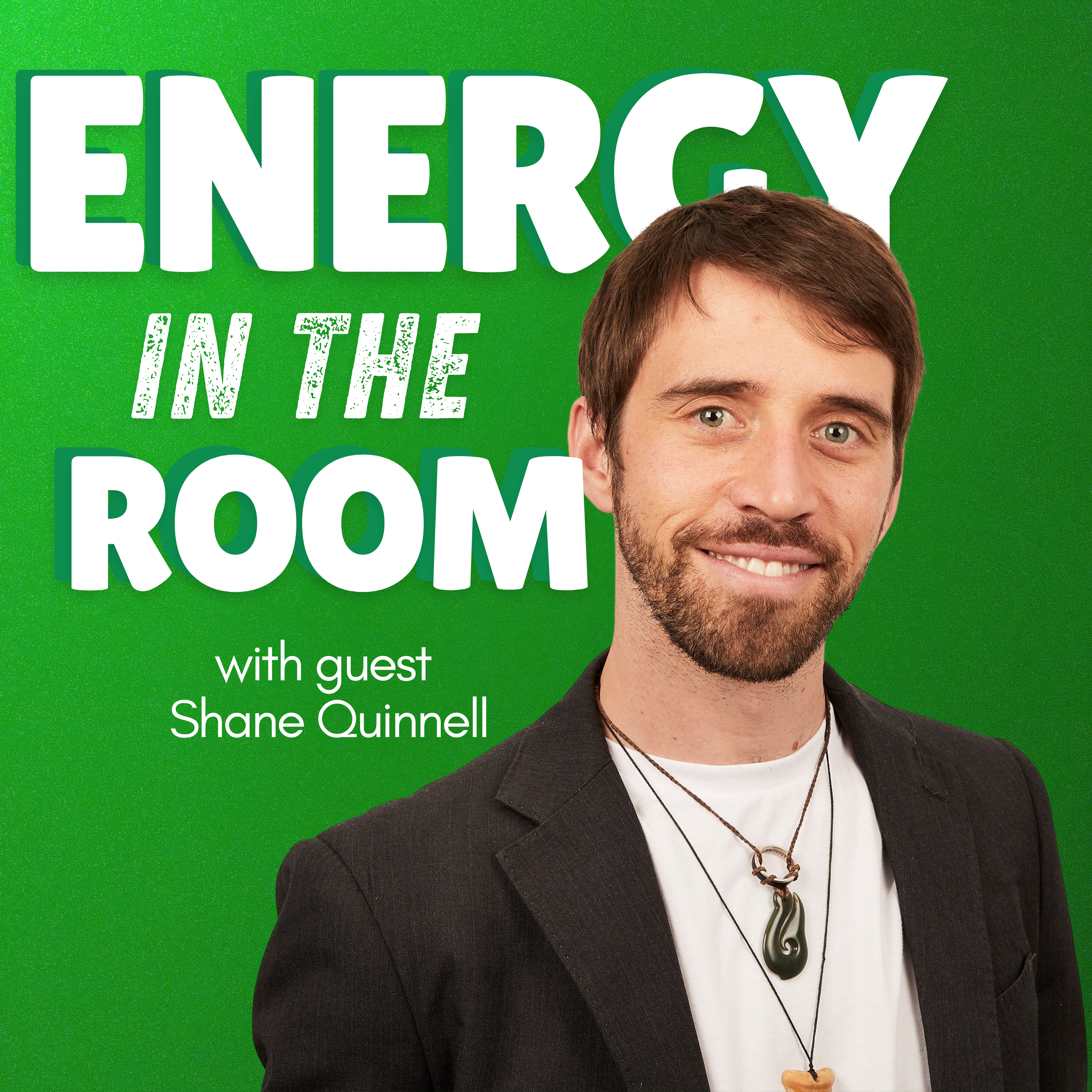
Joining us today is Shane Quinnell, Head of development at West Wind Energy.
It's hard to give a worthy introduction, I think, for Shane, given all the things you've achie achieved and been involved in. But in summary, Shane's got over 13 years experience delivering large scale renewables projects across Australia and internationally.
Shane is also one of the most passionate people I've met in the sector, someone genuinely driving impact, hence why we want to hear from him. So welcome, Shane.
[00:00:52] Speaker B: Yeah, thanks. Good to be here.
[00:00:55] Speaker A: So let's start at the beginning.
How did you find your way into the energy industry?
[00:01:01] Speaker B: It's a funny story actually.
So ironically, I found my way into renewables from coal, actually, funnily enough. So I effectively finished university at the University of Queensland up in Brisbane and following that I did quite a long trip through South America and Canada and a few other things, effectively trying to run away from the office and the concept of being stuck in an office the rest of my life. And, and then continuing that theme, I decided to go and work for a coal handling company out at Middlemount Coal mine in sort of northwest Queensland.
And after about eight months of being in northwest Queensland at this coal mine and getting given effectively the tailings dams which weren't working, and going through a conversation where the company at the time said, look, don't worry about it, if the tailings dams flow into the river next door, that's kind of acceptable, you know, really realized that I just wasn't in the right place.
So at the time I'd sort of been considering options in terms of what I did.
[00:02:03] Speaker A: And what year are we talking here?
[00:02:05] Speaker B: We're talking around about 2011. 2011. 2012.
And so basically, you know, I was originally South African a long time ago and the renewable energy industry there was really kicking off and I had a girl that I wanted to go back and see that I'm now married to.
So yeah, so basically bought a plane ticket to South Africa and just decided renewables was what I wanted to do. And part of it for me was that a, I'd grown this real passion for the environment and sustainability and all these other things because through uni I'd grown a real passion for adventure sports and I'd been in nature and I'd seen and experienced how awesome nature was and then also experienced how we were impacting it. And so there became this drive to try and do something that could leave a legacy of helping protect it and, you know, create a better place.
So I bought a little motorbike. I literally, you know, ran LinkedIn to find every renewable energy company I could find in Cape Town and then rode this motorbike and just basically found the name of a managing director and would walk in and say, hey, I'm here to see whoever.
And eventually, ironically, having just moved back from Australia, but as a South African in South Africa, got a job with Windlab, who's kind of the quintessential Australian renewables developer, eventually convinced them to let me work for a very minimal salary for three months on the basis that if they liked me, they had to keep me.
And that was that.
[00:03:36] Speaker A: This all stem from you going around on your motorbike?
[00:03:40] Speaker B: Sort of, yeah. I mean, I basically would rock up on my little motorbike and just sort of walk in and go and have a chat. And often the gatekeeper would walk out and they'd be like, you're here to see who? And I'm some 22 year old or something.
And they were like, what are you here for? And I'd make some story up and eventually half the time I'd get through the gatekeeper.
So I met Peter Venn, who was then the managing director of Windlab, and I met a guy named Francis Jackson, who was basically the head of development for Windlab South Africa and became a mentor of mine and they just gave me a shot and now I'm still here.
[00:04:19] Speaker A: Yeah. I think people say it's not what you know, it's who you know, but that really simplifies it. Like, you clearly went all guns blazing to try and get yourself into meeting the right people.
[00:04:31] Speaker B: Yeah. And I think, I think part of it for me is that, you know, there's a lot of people that sit there and go, oh, I want to do this thing. And let's just say, for example, let's get a job in renewables. And they go, oh, but I've applied for five jobs, 10 jobs, 50 jobs, and you kind of go, yeah, but you're doing the same thing that every single other person is doing. Right. And if you've got no experience and you've got no credibility, and by the way, you've got an accent from a different country and you've just finished university, you know, what's the differentiator? So for me it was if I do the same thing as everyone else, I'm going to get the same outcome, which is going to be really hard. And admittedly like, it still took three to four months of me driving door to door. And you know, at the time I was working on Table Mountain as an ab sale guide at the same time just to supplement income.
But for me it was to your point, like it was, how do I do something different?
And it might not work And a lot of people probably would get really embarrassed by it. But to me it's just, well, you know, let's just make it happen.
[00:05:29] Speaker A: It's got to be done.
So to get a bit more specific then, like with your early career, is there a time that you can pinpoint that shaped the way, like maybe that attitude or the way you view the work that you do?
[00:05:47] Speaker B: I think Windlab was pretty formative in shaping my view for a couple of reasons. One was that I think renewables is a really interesting industry where particularly historically, but still today, a lot of the people in the industry, probably a disproportionate amount compared to a lot of other industries, genuinely care. And they're there because, you know, yes, we want to develop infrastructure and stuff, but the reason we want to develop it is because of the fact that we're trying to create change and we see the work that we're doing as kind of a medium to allow us to do that. And so there were people back in Windlab South Africa who like Francis Jackson, were there for the same reasons. And so I had a couple of those experiences where and Windlab was really, really good at the technical side of wind energy and they were great at finding good projects from a wind perspective and etc. But also try to find that line between social and environmental responsibility.
I then worked for various companies in South Africa. I worked for a guy named David Wolfram who became a very, very good mate of mine with a company called WK and Wind Current. And that was probably another one where we work pretty hard. But we had board meetings in the sense of we'd go surfing at lunchtime.
So it's this attitude of how do you do something and work really hard at it, but how do you genuinely have fun doing it? And we'd gone, you know, multi week road trips around South Africa looking for sites and we'd go surfing, you know, at these cool spots and yeah, it's pretty awesome.
[00:07:30] Speaker A: Yeah. I think you and I have known each other for about nine months or so and I feel like you have brought that mentality throughout your career still now, like what you're doing is really important. Take your job very seriously in what you're doing. But you do try and, you know, it's your life, and you do try and make it fun at the same time where you can.
[00:07:51] Speaker B: Yeah. And I think one of the things that I find really interesting is that people try and create these segregated buckets. And what I mean by that is it's kind of like, this is who I am at work and this is what I do, and this is who I am in life, and this is what I do. And it's kind of like, well, you know, work is a really big part of life. And by the way, you're not a different person when you rock up at work or when you rock up in life. So, you know, clearly I've still got long hair and a few other things, which probably raised a couple of eyebrows, but, like, you can still get stuff done and be yourself. And it's. It's really funny. I rocked into a meeting the other day with some bankers and I had a suit on and I had a skateboard under my arm, and these bankers are kind of sitting there and they were like, mate, did you bring a skateboard to this meeting? And I was like, whoa.
Yeah. And they were like, why? And I was like, well, because I had to get around the city and it was way more fun than just walking and it's way faster, so it's more effective. And they were like, man, you renewable energy guys, right, like, you're just different. But. But the irony is that people don't find a problem with it. They love it. Right. Because you. You're not trying to be anyone different.
[00:09:02] Speaker A: Yeah, it makes you human. It makes you just a normal person that people want to work with, want to understand, trust, all the things that make things tick along. For sure.
[00:09:14] Speaker B: Yeah. And look, you know, I think the other thing there is that, like, A, it's more genuine, but B, I think one of the big challenges we have today in society is this concept of how to find balance and balance between.
How do we work as hard as we're working and get stuff done, but avoid things like burnout and, you know, stay sustainable. And like, I. I haven't. I haven't really burnt out badly, but I have been through burnout a bit. And what I've found is that when I try and when I start becoming too serious and when I lose track of all that other stuff, that's when those kind of things happen. So I think by finding. And it's not necessarily balance in the sense of you're not, you're not working long hours or you're not trying hard or whatever. It's just, it's almost just caring less. Like caring less and caring more at the same time.
[00:10:11] Speaker A: And I think a lot of the time in the working world, like whatever sector you work in, I think resilience is always a word that comes up and I think that's such a misused word in a way. Like, resilience can mean so many different things. And you're right. Like, I think there needs to be a balance of like, what is just actually overworking yourself and caring too much. And from the outside, someone might look like the most resilient person.
Like, you know, keeps getting knocked down, but just keeps pushing through these, like to get to these milestones and stuff.
But actually, is that too much?
[00:10:52] Speaker B: Yeah. And I think to that point that one of the ironies with resilience is that putting on a facade is not resilient.
Right. And like, and there's a lot of people who are very good at, to your point, outwardly seeming resilient or seeming like they're okay, but internally really struggling. And I think if we can acknowledge how we're doing and you know, and work on that and just sit with it, the ability to be genuinely resilient is a lot easier.
[00:11:20] Speaker A: Yeah, it's like the byproduct.
[00:11:21] Speaker B: Yeah.
[00:11:24] Speaker A: And talking about resilience, I think you genuinely are a resilient person.
So I know you've been through an experience that is totally life changing, to be honest. So you happy to share a bit about that and how that's shaped who you are and where you are?
[00:11:41] Speaker B: Yep.
I'm assuming you're talking about my paragliding.
[00:11:44] Speaker A: I am, yeah.
[00:11:45] Speaker B: Yeah.
[00:11:46] Speaker A: So crazy, crazy stuff.
[00:11:48] Speaker B: Yeah. So back I can't even remember when it was round about probably 2015, I basically was flying a paraglider, you know, a few hundred kilometers north of Cape Town.
Did a lot of flying. I actually learned to fly in Colombia in Spanish, having only learned Spanish a couple of months earlier, which was really interesting.
But yeah, I was flying in a straight line and next thing you know, my wing pretty much imploded. What we think happened was I hit a dust devil, which is like a whirly wind, you know, like kind of invisible.
[00:12:22] Speaker A: A dust what?
[00:12:23] Speaker B: We call it a dust devil. Yeah. So you know when you see kind of little cyclones out in the outback or whatever.
But anyway, my wing basically just fell out the sky and I was a few hundred meters above a mountain range.
Long story short, you Know, try like basically looked down and there was the only set of high voltage power lines on this entire mountain directly beneath me.
So then my, it turned out my wing was actually tied in a knot. So when I managed to recover it, I started spiraling out of the sky and sort of delayed throwing a parachute because I thought I was going to land in the power lines and probably have cooked myself.
So delayed it a bit then threw a parachute. Eventually at the last minute a gust of wind hit me and it slung shot me straight back into the mountain. So I effectively saw this mountain coming at me and I was going probably 80 to 100 ks an hour older. Paragliders had always said it's better to break your legs than your back, so if you're going to hit something, stick your legs out. So I stuck my legs out and I ended up crushing both my legs and then hit my back, broke my back and basically landed on this mountain.
[00:13:32] Speaker A: Sorry to interrupt.
Do you remember this at the time or is this what someone's told you?
[00:13:37] Speaker B: No, no, I was completely conscious the entire time. Yeah.
So I was really fortunate in the sense that I absolutely obliterated the bottom half of my body but somehow other than a small graze on my face, just didn't hit my head.
But it did mean that I was lying on this mountain for like a good hour or two before anyone came and somehow my radio had been malfunctioning so I could hear all my mates going absolutely crazy because they thought I just died and my cell phone went flying so I had no communication out.
So yeah, I effectively lay on this mountain until a farmer came and found me and like it was kind of ironic but you know, I'm lying on this mountain really broken and I had to calm this other guy down and because he was just completely freaking out and he just said to me, he's like, what can I do? What can I do? And I said man, like chill out. Like please go and find a helicopter and just tell them where I am, like go find my mates. And you know, he was completely freaking. But anyway, long story short, you know, spent like a good few weeks to a month in a hospital bed, kind of unable to move.
Spent three months in a wheelchair, had to learn how to walk again.
Yeah, it was pretty interesting the fact.
[00:14:53] Speaker A: That you just brush off, brush over, had to learn how to walk again. Like that is, that is just, I can't even imagine.
[00:15:03] Speaker B: Yeah, it's interesting, right? Like I think it's, you know, a lot of people have asked me, well, I've heard this term, had to learn how to walk again. What does it mean and how did it feel? Right.
In my case, what it meant was that, you know, I'd been incapacitated for so long that, A, I had no muscle in my lower body at all. Like, it was basically just bone and skin.
And B, my ankles had been in, like, exoskeleton external fixators for three or four months and they had not moved. And the problem with joints and stuff is that when they don't move, they completely lock up.
And then you've got the fact that you haven't had pressure on your feet for four months. So, you know, the day that they. They eventually said I could relearn to walk, I was super excited because I was like, you know, getting back to life. They put me in between parallel bars and other than the agony of having first broken myself, like, I've never felt anything like it, right? Like, it was almost as though I was standing on two hot plates with, like, needles and, like, burning nails coming through my feet. And then you try and walk and you realize that your legs don't work.
[00:16:11] Speaker A: Properly, and you realize that mental mountain is maybe the hardest part to it.
[00:16:20] Speaker B: I think the mental mountain is a really, really interesting one.
What happened with me was that a few weeks after the paragliding accident, I had this experience where I was sitting there and I could start feeling my psychology going down, right?
And somehow, fortunately, I had this moment of kind of lucidity where I sat there and I looked out the window and I went, well, you know, I'm here in this hostel bed and this sucks, but actually it's a beautiful day outside, and by the way, I'm still here. And that definitely wasn't for granted.
And I've basically got this choice, and my choice is do I allow myself to go down this black hole of depression and whatever else. And by the way, it's going to suck for my girlfriend, it's going to suck for my friends, it's going to suck for me.
Or do I just kind of accept it and choose this other pathway, which is the fact that I can't change it.
And actually, like, you know, I've got really good health care and my wife or my partner comes and visits me every other day, and I've got mates that are streaming in and out and we come play bongo drums in the hospital bed and irritate everyone and focus on that. And.
And the really interesting thing was that at the time, that was like this fundamental shift for me where it Went from going down this black hole to just stopping. And. And actually I then really enjoyed this experience of like, having time and, you know, like, I sort of half learned Portuguese from the bed and like, like I had wheelchair races with my mates up and down the corridors and, and, you know, and at the time, and I did a lot of, A lot of speaking about it, like retrospectively. And I thought originally that what had happened was I had made the choice to be happy and to focus on that, which I did.
But what I.
[00:18:06] Speaker A: That's how I'm seeing that you got to a crossroads.
[00:18:09] Speaker B: But the irony, right, and the thing that I only realized through doing a lot of digging at it is that until and unless you've fundamentally and completely accepted where you are, you can't make that choice.
And then when I looked at my story of like, you know, this paragliding accident, ultimately we turned my wife and I turned it into kind of a sponsored expedition where we climbed Africa's five highest mountains and we got sponsored by Suzuki and whatever. And when I looked at that, like all the way along, there were these points in time where I got to significant adversity. And it wasn't until I accepted where I was that I could actually move on.
So I suppose for me, like, you know, and coming back to your piece around resilience, like, to me the fundamental tenet that most people forget is that it's actually acceptance, not choice, that drives outcomes in terms of resilience.
[00:19:01] Speaker A: Well, thank you for sharing that. Yes, it is an incredible story and I guess it sounds cliche, but it's obviously shaped the way you, you are and the approach you have to things, and it is really incredible. So, yeah, thanks for sharing that.
And then, yeah, obviously I said you are so passionate about the energy sector, which is incredible. Like, we need people like you in the space, not just a box ticker and things like that, someone that genuinely wants to drive the impact.
I think you and I have had discussions before about the changes that the industry goes through, the state of flux that we're in with things.
So just like a pretty blunt question, is there a particular problem or challenge in the sector that you feel drawn to solving?
[00:20:01] Speaker B: Yeah, it's a really good question.
And I think to that and just to expand on it, the. I mean, admittedly I haven't worked in other industries for a long time and I've only spent bits and pieces at the start of my career. But one of the things that I think is really important to understand about renewables is that renewables is One of the biggest changes that we're going to see in our society in recent history, it's equivalent to we're effectively changing the whole way the energy system works. But at the same time we're transitioning from a fossil fuel dominant economy to this place of electrify everything and therefore demand is going through the roof.
And we're stuck in the middle of that. And what that means is that we're effectively changing unintentionally the incumbent status quo. And whenever those kind of changes happen, there is a lot of pushback, whether it be politically, socially, et cetera.
So in my relatively short career, like I've seen some unbelievable stuff in terms of intervention from politics. And in South Africa, you know, back in about 2016, it got to the point where legally the CEO of the government owned utility had to sign power purchase agreements because companies had met their condition precedents. And the president phoned him and basically just said, do not sign them because I want to build Russian nuclear. Right. And there was a whole bunch of really bad reasons as to why he wanted to do do that, including bribery and whatever.
But that's the background of how much intervention there's been in renewables.
I suppose my opinion today is that we're at this really interesting inflection point because recently we've had the federal election and we've seen labor get back in and it wasn't the only thing that we were deciding on as voters. But one of the major things was this difference between renewables and nuclear. Right? And personally I don't think that there was any genuine intent in the nuclear sort of discussion at all. I think it was really just political.
And I say that from an engineering point of view, ideology completely aside, right? Like time and cost wise, it just doesn't work for the problem they're trying to solve.
And so we've now like the industry is seeing labor coming back in as a really big indicator of let's speed up.
But it's a little bit like hurry up and wait. And I say that because even although from a target point of view, federal governments and most state governments are saying speed up, speed up, here's our target. Let's convert to renewable energy partially for net zero, but partially because of electrification and the need. Because by the way, like it or not, coal's going to turn off, we're seeing additional red tape, green tape, et cetera, come on board until you look like an elf at Christmas time, right? And it's just kind of slowing things down. So there's this Real irony of policy setting targets which are accelerants, but then policy setting targets which are decelerants at the same time.
And, you know, I think it will get worked out, but my concern at the moment is that I think we are running the risk where building out energy in the next, you know, medium term is going to be complicated. And I think the possibility that we're going to see coal closures starting to happen, because, by the way, you know, the plants are starting to break down and there's issues with the energy system and that renewables is not coming online quick enough, in my opinion, is a possible problem. And part of the problem here is that we've just been arguing for so long over should we, shouldn't we, should we, shouldn't we. To the point where we haven't actually been strategic in how are we doing it.
[00:23:52] Speaker A: Yeah. With whatever answer we go for, how do we do. How do we do it?
[00:23:57] Speaker B: Yeah. And unfortunately, and I know this is one of the topics you wanted to talk about, you know, part of the collateral here is actually communities, because communities have been kind of pulled backwards and forwards, both as voters and as pawns and as all sorts of other things in this debate of, you know, are we going renewable, Are we not? Why are we going renewable, by the way? You know, it's like, you know, and then there's heaps of misinformation that comes out about renewables and the amount of confusion out there in the energy space, particularly among communities and councils and things, but also even among the energy industry, is pretty huge.
And then you start considering the change in the rural environment and it's. It's kind of unsurprising that people are frustrated.
[00:24:44] Speaker A: Yeah, definitely. And you're right, like, it is something I wanted to talk about because a lot of the. For the last six months, a lot of the challenges that I know developers have come up against and a lot of the hiring needs that people have asked us for are for community engagement specialists.
And yeah, I guess it's just this, this.
Finally, people have recognized that to develop and deliver successful renewables projects, the community and stakeholder engagement piece needs to be done right from the offset and early days. Like, you know, it's not just a nice to have person in the business, it's like a strategic person that needs to come on board and totally own the community engagement piece.
So it's definitely something that, like a conversation that's been coming a lot with clients and people in industry that I speak to, and coming back to the actual communities Like, I agree, I, I don't blame people for being so frustrated and confused.
So that then leads onto my question about if you, you know, if you could go out into the community and just kind of give one piece of, or like, I guess bust a myth, like, what is it? Or a misconception, like, what was that one thing that you would just say, look, trust us on this, this is true, or whatever, if you get what I mean.
[00:26:21] Speaker B: Yeah, it's a really good question.
I think part of it, and coming back to that point where we were talking about around acceptance and resilience is a. The why.
So why are we doing what we're doing?
And the reason we're doing what we're doing is that Australia needs energy, right? Like energy is now almost an essential service. Like, it's not, it's not quite the same as water and those other things, but it is seen as essential to keep society running. The issue we have in Australia is that all our, like the majority of our incumbent generation is turning off, right, because it's old and it's broken and it doesn't cost it, it's not cost effective and whatever.
So not only do we have to replace that, but we've then also got this hugely growing energy demand, which I think we touched on earlier from things like EVs and electrification and et cetera. And then we've got AI coming in and we've got data centers. And so you add those two things together and suddenly you go, hold on, we need a huge amount of energy to keep the lights on really fast.
And then you add in the fact that we've argued about it for years and years and you go, well, hold on, we haven't actually planned, plan this very well because we've been too busy trying to bicker about whether we should or shouldn't rather than just getting it done.
So if you underpin that, why and that transitions into change is happening, it's not a question of will change happen and it's not a question of will we be building wind farms, solar farms, et cetera. It's simply a case of where and how.
Because as a society, we actually don't have a choice.
And I think one of the really interesting things that I found with communities is that communities, they're just people and they're people like you or I, and like us, you know, they've got priorities for family and for, you know, finances and for healthcare and for all this other stuff.
And, you know, I had an experience where I went out to a community Kind of before the original Albanese election and then after and a few of the people pre the election were pretty anti because they were saying oh well you know, there's this other option. I can't remember whether it was gas or coal or what it was at the time four years ago.
And I then went back to the same people about four months later following the election of Albanese and the 82% target and et cetera and they were like well this thing's happening now, we can't change this and so we might as well get on with it if we're going to get on with it. You guys seem like reasonable humans. Treat us decently and we'll work with you. And I think we need to get to that point where we can have a real conversation about why are we having it, how are we having it and the fact that change is going to happen so let's do it the right way and to stop misinforming people and that sort of thing.
[00:29:18] Speaker A: Yeah, I think it's just human psychology, isn't it? It we do not like change.
So just doing whatever you can to build that trust.
Educate. Sounds patronizing but educate people on, you know, what is it going to look like. Make them feel supported because yeah, it's not a, it's not a case of if it's going to happen, it is going to happen.
[00:29:43] Speaker B: Yeah. And I think, I think it's a case of having a real conversation. Right. Like the irony with communities is that and they will tell people from the city this all the time but we often don't listen is that they just don't want us to beat around the bush.
Communities will accept a firm respectful no even if it's to something they want. Quicker than they will respect a political response of we'll try but we don't know if we can. But we'll whatever and then nothing ever happens.
So I think if, and you know, I think like being really clear on boundaries and being clear on what we can do and what we can't and there are things we can do. There are, you know, like the ability to potentially ship turbine locations or to reduce impacts or to whatever those things are. But I just think that clarity of having that conversation really openly and, and genuinely and actually, you know, if we can change things, change them. If we can't change things things then have that discussion. Yeah, it's a big part of it.
[00:30:43] Speaker A: Yeah. And I think obviously you have genuine people in the industry, genuine businesses and organizations.
Do you think that for those that perhaps don't have the mindset that you've got, but are still working in the industry.
Do you think that the current legislations are enough to keep people in check and doing what they should be doing, or do you think there should be more legislation?
[00:31:10] Speaker B: It's a really good question. And you know, just by the way, you know, again, this is really topical. Like, we've seen some really major planning changes in Queensland in the last six months which have had a pretty major impact in terms of investor confidence. Like the Queensland Renewable Energy Council's April survey, which is an update on a survey that I think happened because about six months ago, shows that policy stability, which was previously the fourth or fifth highest risk or concern for investors, is now number one, like top of the list.
In addition to that, it showed, and I speak under correction, but I think it was around about a 50% decline from around about an 85% positive rate of investing in Queensland to around about 35% or something, or whatever it was.
So there's been this market impact. But one of the things the Queensland government has come out and said is that their reason for implementing a lot of these changes, which is part of the intent, is to try and effectively enforce community engagement and to enforce good behavior because communities were getting increasingly anxious and frustrated about the way things were happening. So I think there's two answers to this question. The one answer is that I think corporates and organizations need to realize that it's not a nice to have and whether you're doing it because you're being genuine, which I hope you are, or whether you're not. The reality is that if you don't get commission, community, right, it can and will be a major risk for your projects. And so there's this need there, which. And I've spent a lot of time, you know, over a long period trying to communicate this point because it's something where for years, to me, the writing has been on the wall and I struggle to conceive how industry doesn't see that. And, you know, a lot of people do, I think, like. And coming back to one of my earlier points, like, a lot of people in renewables genuinely care.
And also there are people who for whatever reason, have had less focus on that. And to be honest, I think one of the things to understand here is that the people that are not necessarily going out engaging as much as certain others, it's not necessarily because they're bad actors and it's not necessarily because they don't want to do the right thing. It's potentially because they see risks in terms of being being drawn into the political media ping pong match between conservatives and, and you know, non conservatives and like all of that other stuff. So there's, it's often coming from fear rather than from not wanting to do the right thing.
[00:33:59] Speaker A: Yeah.
[00:34:01] Speaker B: Yeah, yeah.
[00:34:03] Speaker A: No it's.
You're so right. Like I think it's, that's the phrase I always have been using is it's not a nice to have to do the community engagement piece. Right. It's like it's critical but I think.
[00:34:18] Speaker B: And just to wrap that up in a bow, the other thing to be aware of is that community engagement is hard to get right. And it's hard because it's not a hard skill, it's a soft skill. And you know, it's not like you don't go to community and go one plus one equals two. It's. We've got this community that's made up of heap of different people and by the way, we're engaging, you know, tens of stakeholders all over the place and each one has a different perspective and you know, we're trying to help have this engagement but it's not landing how do like it's quite, it's quite sort of esoteric and quite. And it's community is, it's hard to get right and it's something where I think sometimes industry gets a bad rap even. Although a lot of people are really trying. So you know, coming back to your original question about legislation, I think, I think legislation has to be set up as guardrails. You are never going to be able to legislate every outcome. And by the way, if you try to, what will happen is you will inhibit businesses and industries and communities from getting genuine outcomes. And one example of that is, for example like setting up guidelines or regulations that are too prescriptive in terms of you have to give this bucket of money to this group because what that does, it takes away the flexibility and the creativity from me. Getting a social impact assessment, getting the outcomes of that and then working with community groups based on what they actually need, based on what they've told us. And it just goes to a transactional approach of you're doing this, they want that, so you give this to them. But it forgets all these other groups over here.
[00:36:00] Speaker A: Yeah.
[00:36:02] Speaker B: So I think we need to be cautious of how we legislate. I think, yes, you know, legislation in terms of mandating community engagement stuff is positive but there are unintended consequences which can be pretty problematic.
[00:36:13] Speaker A: Yeah, yeah. And I think, like, up to this point, like, it's clear that the industry is pretty turbulent from a lot of different aspects. I think you've, I've heard you describe development as snakes and ladders.
[00:36:27] Speaker B: Yeah, it's more like, you know, funny, I actually, I talked to someone else about that and they were, they were terming it as just ladders. Just snakes. Sorry. They were kind of like, I've never really had, like, where, where are the ladders that skip 20 pieces on the game board? Right. It's like I found a cobra and I happened to slide down to zero, but I haven't found a ladder yet.
[00:36:47] Speaker A: The ladders will come.
[00:36:48] Speaker B: Yeah, I think they are coming.
[00:36:50] Speaker A: Just be resilient.
[00:36:51] Speaker B: Well, I think they are coming. I mean, you know, we've seen in, in places like New South Wales increasingly trying to offer pathways to expedite, you know, planning approvals and we've seen the project priority list at the federal level, which is trying to earmark projects. So I think the ladders are coming.
I don't know if they're working that well at the moment, but I think at least there's the intent there.
[00:37:13] Speaker A: So with all the snakes and some ladders, maybe. What do you think's one thing that people in the industry should not lose sight of?
[00:37:22] Speaker B: I think the big picture and what I mean by that is that often, and I think this is a human phenomenon, but we get really caught up in the day to day of, ah, we've got this problem, we've got that problem. And by the way, you know, some policy came out and it's frustrating and like, like policies changing and, you know, there's all this hysterics, like if we just, if we cut that noise and we just dial it back.
The reality is that Australia is going through a period where coal is shutting down and whether it's five years or whether it's seven years or whether it's 10 years, who actually really cares? I mean, yeah, it makes a difference. And like. And actually, you know, contrary to my comment I just made, it'd be really good to get some clarity on that.
But also it's happening. And by the way, energy need is increasing like a rocket, and I don't think we've seen anything yet. And the reality is that something has to plug all that energy which is needed to power our homes and our cars and, you know, all our lights and our offices and all this other stuff.
And the only real thing that can do that with enough volume, quick enough, cheap enough, is renewable energy. And that's not an ideological statement like you take climate change away, you take sustainability away. The reality is that currently there is no other real technology that can be deployed fast enough at a reasonable cost of energy to fill that void.
You know, there is, there is gas, which can help to ping, but by the way, gas is a much more expensive technology and it's part of the story. So I'm not saying that renewables can or should be 100% right now, but the energy mix in terms of the build out, it's the most sensible technology that's been proven to work.
And if we consider that, and we consider that we've got this huge energy need and it's the technology that can work, the reality is that somewhere sometimes we're going to just have to start putting heaps of renewables onto the network.
And so yes, there are problems and yes, we need to focus on them and we need to fix them.
But the big picture and the target coming back to the federal target of 82% renewables by 2030, that's a clear indicator of what the government is saying they need.
If we accept there are problems and we focus on them, but we don't agonize over them and we just focus on solving them, let's just get it done.
And probably the final thing to that, and going back to a book that was written by Ross Garneau, who was the chief economist of one of the prime ministers, I can't remember if it was Kevin Rudd or someone, but he wrote this book called Superpower, and it was a book where it described the renewable energy opportunity for Australia.
I think one of the issues is that we're constantly focusing on problems and we're focusing on the issues with community and we're focusing on the issues with renewables and the issues with politics, why don't we start focusing on the opportunity? And the opportunity here is astronomical. Like we've got a technology where Australia has like some of the best natural resources in the world. We've got space, you know, we've got the ability to have an industry that can actually drive this and, and that creates jobs, it creates lower cost of energy. And by the way, there's a whole heap of Asian countries just up the road who wish they had those things because they don't know how they're going to power their countries with decarbonization targets.
So how do we increase those opportunities, reduce the risk, but let's focus on the good things, right?
[00:41:03] Speaker A: Yeah, again, what do I know? But I think that with the recent election results, maybe we have kind of gotten over the hurdle of less toing and froing now. And what is it, 82% renewables by 2030. Like, do you see these next five years? Like, are you hopeful with that or do you feel like, do you feel that there is an awful lot to do to get there?
[00:41:32] Speaker B: It's a really good question. Look, I think I'm probably an optimist by nature.
[00:41:37] Speaker A: Yes, I would say so.
[00:41:39] Speaker B: But I would say, like I've also seen quite a lot. Right. And I would say I'm cautiously optimistic.
There's a lot of, there's a lot of question in the market and you know, in the media about is 82% renewables by 2030 achievable?
[00:41:55] Speaker A: Where are we at now?
[00:41:56] Speaker B: It's a good question. I think we're around about sort of 45% or thereabouts.
Look, it's going to be really hard, but also, I don't know if that's relevant. And the reason I say I don't know if it's relevant is it kind of comes back to that quote, like, aim for the moon and you land among the stars. Right. Like whether we achieve 82% or whether we achieve 83% or 70% or whatever that number is, who actually cares? Like, the reality is that we've got a heap of stuff to do really quickly and we need to find a way to do it in a manner that builds trust and builds the opportunity and builds better outcomes for stakeholders, plural. And that includes communities and includes industry and includes government.
So let's focus on that.
[00:42:46] Speaker A: Yeah, I mean it comes down to everything. Like you have to have goals, you have to have targets. But I like, personally, I really agree with you of like, well, if we have those goals and targets, obviously we're going to do our best to get there and do everything we can. And if we don't quite get there, but we get to 70% or whatever, then at least something's been done.
[00:43:06] Speaker B: Yeah. And look, I think probably two other things.
One is that the power of targets can't be overstated. And it's interesting because like in my personal professional life, you know, I historically have been somewhat hesitant with the idea of key performance indicators and driving people with them because I think sometimes it creates misaligned behavior between teams and stuff like that.
But retrospectively, Light Source was a company, for example, that was driven a lot by end of year targets to achieve financial close and things.
They did a staggeringly amazing job at getting things to financial close.
And part of that was driven by the fact that everyone had a common goal. They were very, very clear on what they needed to achieve. And you know, we found ways of pulling rabbits out of hats like every other day to try and solve problems because we had this focus. So, you know, I was having this conversation the other day where someone said to me, oh well, don't worry about it, targets are not that important, we don't need them. You know, industry will just be fine. And I was like, mate, like I don't think you get it right. Like industry needs targets and we have to have a guiding star because without that we're all just floundering. It's a bit like getting in a car and putting your GPS on the dashboard, but not knowing what your destination is.
The only other thing to your earlier comment of like, do I think we can get there and will it be hard?
The answer is yes, currently it will be hard and it'll be very hard. And the reason is that to my earlier comment, we are setting targets but we are not setting the policy to align with those targets from a whole of government approach.
And so we've got planning legislation that in some way slows us down and doesn't create the right stages to align with projects.
And so it is absolutely critical that we find a way to try and align policies, policy with targets and to try and find ways of keeping assessing projects but allowing them to move at a speed that allows them to achieve those targets.
The other thing which there needs to be a real focus on from my point of view is the cost of energy. So the renewables world, like house building and like every other construction, the costs have increased dramatically since COVID You know, we've seen very big cost increases which is affecting that LCOE or the levelized cost of energy.
And unless and until we can solve that problem, we're going to start having difficulties in terms of getting projects to financial viability, which means they can't get constructed, which means they can't generate.
And you know, there's, there's a few things in that, in terms of the way that our grid process works and the ability to, to leave competition, competition among different suppliers and manufacturers, which currently we're inhibited from as developers because of the way we're being forced to develop projects.
[00:46:06] Speaker A: Yeah, it's an absolute minefield really, in my opinion.
But it's been great to get your perspective on things and hear about your opinions and advice.
Really, really grateful. We have a tradition that we're going to be doing on this podcast for guests to recommend someone that they'd want to hear about or hear from on the podcast. So who would you recommend that we have a chat to?
[00:46:36] Speaker B: It's a good question.
I would say probably the person that I'd be most intrigued to hear from is Matt Keane. So he was the previous energy minister here in New South Wales. And I think one of the things I really admire about Matt Keane is that even while he was in the Liberal government and broadly they were more or less kind of opposed to renewable energy and going for other things, as a treasurer and energy minister of New South Wales, he was pushing renewables as both an economic and social imperative and priority.
He's now obviously working elsewhere and he's not in politics, but I think he's someone who's got that view of how the political alignment works in Australia. And he also, you know, really understands the science and the economics behind it.
So, yeah, if you can get them on.
[00:47:22] Speaker A: On board, I think Matt Keane or Come on Energy in the Room. Yeah, we'll give it a go.
[00:47:26] Speaker B: Give it a go.
Set it. Set a target.
[00:47:30] Speaker A: Thanks so much, Shane.
[00:47:32] Speaker B: No worries. Thanks for.