Episode Transcript
[00:00:01] Speaker A: Welcome to Energy in the Room. I'm Katie. Join me as I sit down with the inspiring voices shaping our energy future. Together, we'll share real stories, big challenges, and honest advice from those leading the transition.
Let's dive in.
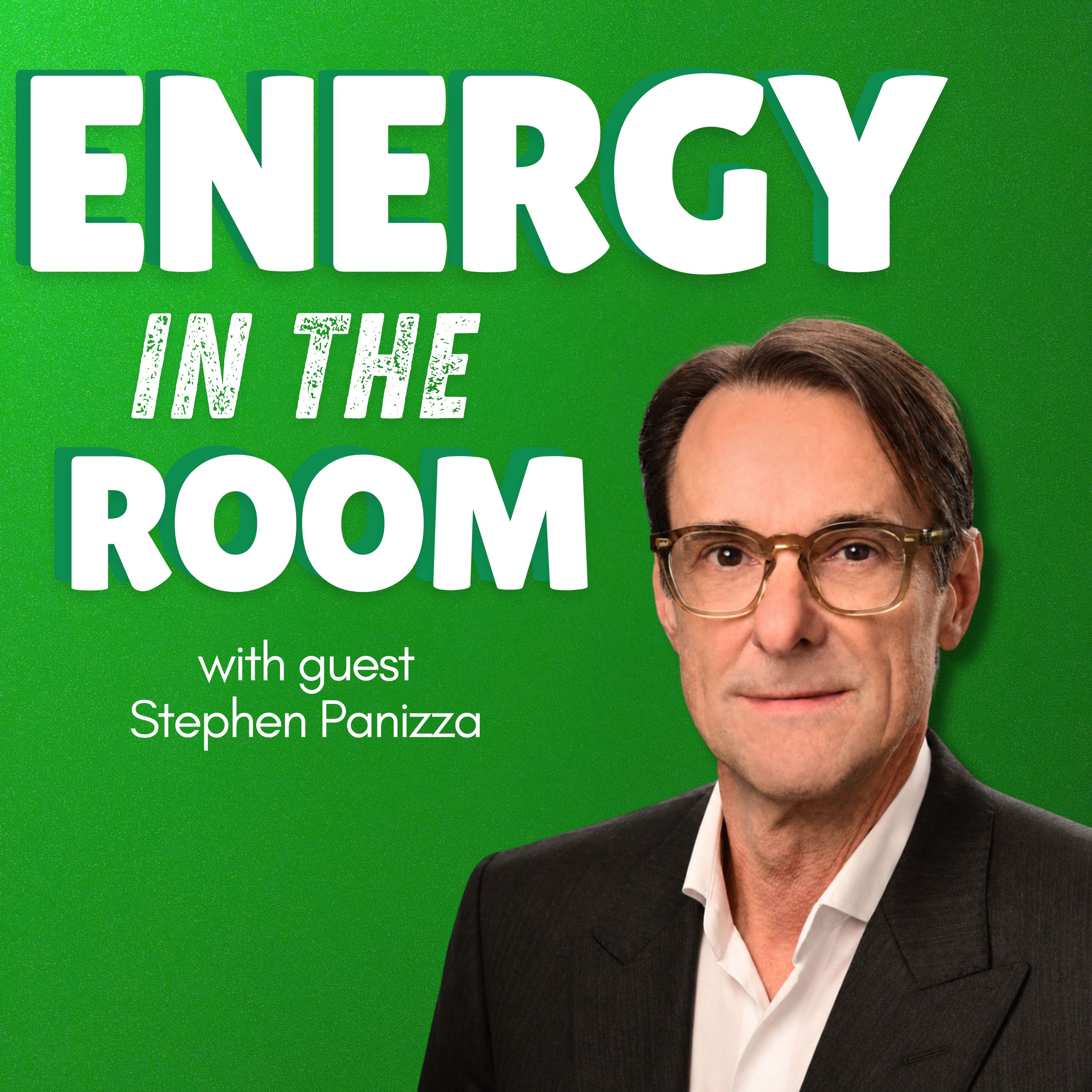
So today on our podcast, I'm excited to welcome Steven Punica. Hello, Stephen.
[00:00:26] Speaker B: Hello.
[00:00:28] Speaker A: Thanks for joining us. So Stephen's a longtime leader at the intersection of clean energy, capital and finance. Stephen's a founding partner and head of renewable energy at Federation Asset Management and was previously the chief Investment risk Officer at the cefc.
[00:00:45] Speaker B: This is true.
[00:00:47] Speaker A: Over his career, Stephen's helped shape how institutional capital flows into renewable energy and brings deep perspective on the challenges and opportunities in financing the energy transition projects here in Australia. Australia.
We're genuinely thrilled to have him on Energy in the Room to unpack where the renewable energy sector is heading, what investors are watching, and how talent and capital can come together to power the next phase of the energy transition.
So you've sat on the investor side for a long time.
Yeah, I've used the phrase long time
[00:01:21] Speaker B: twice already, so fairly evident if you look at my face.
[00:01:27] Speaker A: How would you describe investor appetite for renewables right now compared to say, five, 10 years ago?
[00:01:34] Speaker B: Well, we're past the hype phase.
The energy transition is going to be achieved not through hype, not through focus on immature and expensive technologies like hydrogen or small modular reactors.
Energy transition's going to be achieved through delivering infrastructure. Energy used to be boring. We need to make energy boring again because it's just infrastructure delivery. And if you're going to replace coal, you're going to replace coal with the solution that delivers you the lowest system wide cost of energy.
And that's wind, solar and batteries. And so that's what we're implementing. So we're beyond that phase of sort of looking at the stars and hoping that's going to achieve the energy transition. And we're now in that phase of realization of the enormity of the task and the complexity of the task we have in the energy transition. But it's underway. I'll achieve it.
And it's down to engineers and builders and investors. So we're not so fashionable anymore. But that's a good thing. We need to make energy boring again.
[00:02:50] Speaker A: Okay, well, the irony of my next question was around like, what if you look at the market today, what are investors getting excited about? What type of technologies?
It sounds like it's the boring ones.
[00:03:03] Speaker B: Well, you need to separate their early stage technologies and venture capital investors from late stage existing technologies where you're just going for mass deployment and the absolute lowest cost of energy by their nature. Early stage investments are going to be early stage technologies are going to be more expensive.
We tend to sort of fixate on a certain technology for a period of time, like the whole hydrogen thing. If you look at some of the papers I've written, been quite skeptical about hydrogen as a panacea for a long period of time. Same with small modular reactants. They have their applications, but they're very, very expensive, very complex.
[00:03:43] Speaker A: And batteries right now seem.
[00:03:46] Speaker B: Batteries right now are the obvious in combination with behind the meter solar are the obvious ways to deploy that. But coming back to technologies, there are some technologies I'm seeing that are not yet mature that I think with maturation will have a definite application in the energy market. One of them I'd call out is a business called Wife Swell Energy.
Now I've been a massive skeptic of wave energy or tidal power for that matter.
The history is littered with failed projects. These guys have quietly come up with technology based on existing technologies, but assembled in a way that has a real potential to be part of the mix.
They've run a. They've had funding from the Department of Energy in the US and they've run a.
[00:04:40] Speaker A: Sorry, what did you say their name was?
[00:04:42] Speaker B: Waveswell Energy, small Australian company with the technology, I think this might be 15, 20 years, but it will achieve maturity and it has the advantage of non correlated renewable generation. So when you think about total system wide cost, you're going for non correlation. So people talk about the sun not shining, can't do much about that.
Our grid is north, south and solar is highly correlated. It's one of the reasons we need so much storage. Wind, you do get diversification. But if you can find technologies, even if they're a bit more expensive, that generate at times when the other renewable technologies are not generating, then you're contributing to lowering the total system cost. The total levelized cost of energy of the system. Bit much detail.
[00:05:33] Speaker A: No, that's brilliant.
And like whether it's in relation to like what you. The company you just spoke about then or yeah, Waveswell or just. Yeah. Projects in general. Like what differentiates from an investor perspective, what differentiates what a project looks like on paper and how good it can look on paper versus to actually wanting to back that and actually being prompted.
[00:06:01] Speaker B: Okay, I'm going to bifurcate that answer between hybrids. So solar and batteries and wind and solar and batteries. Well actually both technologies, it's all about the grid.
So we've reviewed hundreds of projects and some of them are in great places and look great and have great solar irradiance.
But grid engineering, power systems engineering is a highly complex, expensive and time consuming task and very few developers have the capability to do that. So you come up with a, you develop a project, you get your land, you can go through a development application, you can put, probably even some could put in a grid application.
But until you've done that engineering, you don't really know whether that project's going to work. So to me, that is really the key. We've looked at 300 plus projects.
90% of those projects would fail on basically on grid. So that's why at Federation we kind of reversed that order. And before we did any development work, we did a grid study and identified regions in which the grid needed system strength, batteries can provide the grid needed generation, which hybrids can provide, and then said these are the areas we want go off, we'll buy a project or we'll go develop a project. So that's solar in wind, what's a good project is constructability.
So one of the really nice things about solar, and we learned this with the Riverina battery energy storage system construction risk is so controllable. You come in, you put down pads, like building a house put down pads and you drop boxes on those pads and then you have the balance of plant connection. We built Riverina during COVID and in a 100 year flood event around the site and we did that on time and on budget.
Those circumstances in wind, it's much harder to control constructability because you're moving very big pieces of equipment long distances. And of course wind farms are on the top hills, not on flat boring old land which is where you put batteries. So as we assess projects, wind, you really look at it, what's the quality of the wind, what's the ability to connect to the grid? What's the diurnal profile that is, is this wind just blowing whenever there's solar? So you're producing it in negative prices and how easy is it to construct this thing? How much risk do you take?
[00:08:39] Speaker A: Okay, yeah, I think when one of the first times we spoke about Acera Energy, which is one of the platforms that you founded and it's. I remember you said we are very grid first, very grid centric.
And we delved into why that is and I think I've heard more and more conversations around developers taking that approach. And I think you even said like nearly all of the people that are employed at Acera Energy are engineers. Engineers by trade.
You.
[00:09:12] Speaker B: I'm only the chairman and you know, I don't have much to contribute in that way. But. But that's the.
At its heart, what batteries are doing. The reason we thought it was a good asset class because batteries provide a service to the grid which stabilizes it. So you connect a solar farm to the grid, you're weakening it. Connect a battery to the grid with a solar farm out the back, connected to the battery, not the grid, you're strengthening it.
So that drove the thinking around. Well, where does the grid need it from system strength perspective, where does the grid need it? From the storage. And identify those regions.
[00:09:48] Speaker A: Yeah.
[00:09:49] Speaker B: And so it's no secret we avoid Victoria and South Australia for various reasons.
Northern Queensland, Southern Queensland, Northern New South Wales, proximate to Sydney Lode, Sydney Hunter, Illawarra Lode, and then out in Western Australia, north country and east country.
These were the areas that we identified that required support and storage.
And really all it's about is what's the technology applied where that will maximize the efficiency of grid. We have the capacity of the grid we have today whilst we're waiting for grid upgrades. And that's the marvelous thing about battery technology.
[00:10:31] Speaker A: Okay, okay. So.
And please take this down whatever avenue you'd like to. But if we talk about red flags, risks that maybe developers underestimate, I guess, aside from location, what can you talk to around that? And yeah, when you're looking at a project, something that you would really encourage people to really think about.
[00:10:57] Speaker B: Yeah. Yeah. Okay. So I'll answer it this way. When we decided to set up Acera, our market survey indicated there were 70 developers and about 300 projects available to buy.
You would think with that fact set, you would have to be mad to then go and say, hey, I'll be the 71st developer.
But we did decide to do that because of those 70 developers, less than 10% can actually deliver a battery into operation. And we want to be one of those.
That's the first thing.
It's no issue having an ecosystem. And we happily buy a project if somebody comes up with it that happens to be in the area that we want at the scale we want with the hybrid, well, we'll pay a good development fee.
We bought Riverina as a late stage development from Edify Energy, outstanding developer. So we will happily do that.
In terms of the project. Again, it comes back to given the services and what you're trying to achieve with batteries, it comes back to the engineering, the electrical engineering.
Now, I'm not an engineer, but what I've observed is even electrical engineers can only go so far. You need specialized power systems engineers to do the very complex grid connection work. So even the engineers we have can't do that very end bit. We now have a grid power systems engineer as well. But having that work done in advance and at least, at least knocking off 50% of the grid work, it's going to select out so many of those 300. So you've got limited resources, limited capital. Where do you apply your bets?
You're going to give yourself the best chance of getting a good project by trying to eliminate anything that's not like that. Now, as we call them, two guys in a truck, which is not a criticism, but those guys are very good at finding land and that's a skill in itself.
But I would much rather say do that grid work, which we did in advance and took about a year, have that view of the grid and then say to the two guys in the truck, go find me a project. Which is exactly what we've done. And so in Acera, I won't take credit. It's also like in Acera, but in a short time, about 12 months, we narrow that down to about nine projects with three hour mid stage. All three of those are bit into Cesar Rabs.
So in 12 months, that is incredible. Extraordinary. And that's recognizing what we can do and what we can't do. Working with, you know, land people.
That was a strategy. Yeah.
[00:14:04] Speaker A: And actually, is there anything else you want to share with people that are listening about Acera and what the strategy is around there? And Sally.
[00:14:12] Speaker B: So Sally's awesome. Sally's an industry figure, so I'm sure, you know, all of the viewers of this podcast would know Sally, but it's just coming back to, apart from being an engineer and being brilliant and very experienced in all of this, her mind set for Community is extraordinary.
And this is one, I think, you know, this is one of the real risks in buying projects. And one of the red flags I'll look for in a project is how has this developer treated the community?
What has he said? She said what?
You know, is there any opacity in the terms of the land securement?
Because they're there for a year and they're gone. We're there for 30 years.
We will, in both our platforms, WinLab and Acera, we will gladly walk away from a good project that's not supported in the community because you're just up against it.
You want to work with communities and you want them to want you there. And Some of the places we're putting batteries in, they don't see a billion dollars of investment. They would never see a billion dollars investment. So the communities are massively supportive. That's what will build batteries.
[00:15:27] Speaker A: Yeah, I think if there's anything I've really noticed in the last year in the market is that community engagement focus for developers and making sure that it's done right from the start.
And yeah, we actually had Sarah Guilfoyle, head of stakeholder relations at Voyager Renewables. She came on our podcast recently and just talked to the Community Engage piece for half an hour or so and it's, yeah, it's, it's.
I don't know if it's too complex as such, but I just think the, the, the. Well, I suppose it is complex and, but it just requires a lot of attention.
I like and I think that people are really understanding that now.
[00:16:15] Speaker B: Look, it's, it's a critical element of a project because if you don't have the community behind you, you just, you're going to struggle from the very get
[00:16:25] Speaker A: go, you're probably going to fail.
[00:16:27] Speaker B: The good thing about batteries is they're boring, low cost, low visual amenity, low noise and environmental impact is limited as well.
So you know, from that perspective you can work with most reasonable people in the community.
Some people will have a philosophical objective you're never going to change and you just try to work with them, try to mitigate it.
We have a package of incentives, call it compensation if you will, for people that are not only directly impacted, that is it's on their land, but the community around it.
We support local communities. Often we're working in the country, mostly we work in the country. So local communities, local shires, we have a program where we offer discounted energy bills for people within a certain radius of the facility.
So that's absolutely key. When it comes to wind, obviously you have far greater, these are much larger projects and you have far greater development timelines and community consultation periods. Environmentally, because of where you need to locate wind, it can be a little bit more challenging. But again you need to be doing fatal floor analysis right up front. Wind can be 10 year development cycle through to FID.
You don't want to find out a problem in year nine because you've spent millions if you want to find out problems. So we do, in wind lab, we do fatal flaws analysis very early on to say this looks like a great place for a wind farm. Great wind.
But if you've got population density, we won't build turbines within 2Ks of a household and the community doesn't want you there. You have to make that tough call. Okay.
You know, I've spent $2 million on this. It's not going to work for these reasons. It's a judgment call. What I've said time and again to the guys at winlab, it's okay to fail. Well, it's not. But you're going to fail. Right. And what's not okay is failing very slow. So running a project for 10 years, spending $8 million and then failing, you're going to fail. You fail fast.
And that's certainly been the case with, in our period of ownership with WIN Lab. We've been fairly brutal on spend and on project selection. So we've given up on sites that, you know, on paper look great.
But Community two, dense opposition is there. And the other factor is, if you look at WIN Lab and Acera, these people are all environmentalists. Like, the reason I'm doing it is because at heart I'm a conservationist, put it that way.
To have allegations that we're sort of destroying the environment or damaging species, which are in point of fact, baseless, and we have years of very expensive studies to prove it, that's devastating. So you want to avoid that.
And when we can, we do.
The reason we're doing all of this is for the environment. We're not there to kill.
[00:19:43] Speaker A: Yeah.
The whole reason we're doing it is for the environment.
Yeah. Okay.
And now let's talk data centers or data centers, as you guys, which side of the Atlantic?
[00:19:56] Speaker B: Iran.
[00:19:58] Speaker A: I'm going to try and stick with data for as long as I can.
So data centers.
Does data center demand mean easy investment? Like a lot. I think a lot of people in industry are just trying to wrap their heads around data centers. And if it is something that we should be seriously considering.
[00:20:19] Speaker B: Data. Non data. But anyway, data centers. We're in the hype stage of data centers. We're in the hype stage of AI.
We're probably on the cusp of it, starting to calm down again. I'm old and so I've been through cycles. Earlier on in my career I did advised and invested on digital infrastructure, as we call it today, submarine fiber optics, as was the case then, fairly niche part of the world.
And I would say the same thing is happening. The lessons we learned there, which is we massively underestimated demand for fiber.
Underestimated. But we dramatically overestimated how quickly it would happen.
And if you're project finance and have a thin capital layer that capital's gone if you get the timing wrong, even if the demand forecasts are there. And I think the same thing is happening with data center. So I do believe that we'll need that much storage. I absolutely believe that. I don't believe it's going to come anywhere near as quickly as anybody anticipates.
We'll find uses for AI that are really going to drive that demand, but I don't think it's correcting my emails.
Much more demanding task. I don't know what it is, but at some time in the future, who would have thought cat videos, people worked out they could put cat videos on social media would drive massive demand for bandwidth. It did. Seriously, once, once people started using apps for image and videos, the demand for bandwidth shot through the roof. That's not a business plan. Oh yeah, people are going to send cat videos.
So we don't know what the applications are going to be, but we do know it'll happen for sure.
And so why I would look at data centers is broadly it's just electrons, it's another form of demand. And look at Australia's demand for electricity. I think peak electricity is probably changed now, but peak electricity was 2005 in Australia and so very flat demand.
And as an industry we've been looking at that then decarbonization and that's been what's driving it. We had this whole thing about the hydrogen superpower which massively would increase demand for energy, but that's proven to be hot air.
But data centers certainly will change the profile and demand for energy.
So that's the perspective that we look at it from now where that's a little bit wrong is that data centers need a very specific type of energy, so super reliable energy.
[00:23:22] Speaker A: Yeah.
[00:23:22] Speaker B: And so they, they're just going to want the lowest cost of energy primarily, but they need really, really high quality environment.
And so I think the, the way we will go with that is they'll be contracting with people like us. And I know, you know, Amazon and you know, and other large players are out there in the corporate PBA market, which is great for our generation assets, the hybrids and the wind, but data centers actually need more than that. And so I think ultimately the solution for Data centers, particularly AI data centers that need super high reliability, 5, 6 times reliability, it's going to be a combination of contracting with low cost energy sources but then augmenting that with reliability. And that combination I think is going to be in the short term batteries, as in if there's a problem, the immediate Response would be a period of batteries that are sitting there and available to pick up instantly and then really cheap, probably internal reset fossil fuel generation. So just as we have on buildings, an emergency power supply that sits there waiting for the electricity to go off.
That combination is going to deliver the most reliable and at the same time lowest cost of energy. So if you're going to ask me, well, what is a data center, what's the opportunity with data centers?
[00:24:58] Speaker A: Yes,
[00:25:01] Speaker B: it's to sell electrons. That's fundamentally the opportunity in my mind where somebody smart, ambitious and motivated could build a great business is to go to a data center provider who really only wants to store data and say I will take care of the energy problem and I'm able to write you a service level agreement at the level they need it and then themselves put together all of those things that I talked about that they're going to ultimately need to go in to the system that provides it to it.
[00:25:38] Speaker A: Yes. You did foresee my question there around like if someone ambitious is going to try and tackle that like where? Yeah, what's a piece of advice?
Because yeah, I think people are really interested in it and it's just navigating like how, when do we really start looking at it and what is the opportunity?
[00:25:57] Speaker B: And this is not just limited to data centers.
I think that owning customer problems is the way to grow energy businesses in Australia.
Why do I say that?
We get many things wrong, but one of the things we got right when we started off with winlab and Acera is focusing on the corporate PPA market rather than government schemes, subsidies or otherwise.
Corporates are easy. They want cheap electrons. If it's green, all the better. They just want cheap electrons. We've signed the largest windlass sign, the largest ever green PPA in Australia with Rio Tinto. 1.2 gigawatts 25 years. Like yes, Rio Tinto, 25 years. Yeah. That's unbelievable. Yes, Rio Tinto has a decarbonization objective and more power to them, but they're making aluminium and they need the cheapest power and we were able to buy the cheapest power. That's why they signed that.
That's why they signed it. Now Rio's big enough and ugly enough to have its own energy management capability.
But once you get beyond maybe the top 20 companies in Australia, you get to the, you first come to a position where they don't have that capability. And so that's, that's that problem we should take on. So rather than just be, I build wind bulbs, I build Batteries, we need to provide solutions. Not becoming a retailer, but if you're going to a mining company or some mid market company that's got a reasonable demand, you're not really going to achieve much by saying here I've got this wind farm and this is the profile, so when those electrons come, you'll take them and thanks.
That's generation following ppa. We need to flip that to a low following PPA and go, what does your energy profile look like?
Okay, I'll write you a fixed price green PPA to fulfill that load.
That load that is load falling PPAs. And when we get to that, we'll certainly have massive demand for that service. So with Acera, that's where we're trying to go. Because with a combination of batteries and generation, Sally's fond of saying she'll sell you what shape you need to be sold because that's the flexibility you have with batteries.
So PPA market will change this. Yeah, forget the ideology.
Cheap electrons.
We can do that and we can do that with renewable cheap electrons.
[00:28:44] Speaker A: Okay, got you.
And then let's talk people.
My favorite part, When you're looking at buying a project or investing into a business or being part of an organization, how much do you look at the people and the team that are in that organization versus just the portfolio and the strategy?
[00:29:14] Speaker B: The portfolio is not going to be nothing without the people to deliver it. And the portfolio they're buying is going to be a function of the quality of the people.
Energy.
As I said, it used to be boring.
It's a long term industry. There's no fast bucks to be made in energy.
Maybe you can ride, you know, you can get lucky and ride a theme somewhere, but it requires consistent effort, deep, deep expertise and just engineering excellence and super high standards. Right.
I can't remember the exact figures, but it's something like 30 seconds a year.
So the acceptable delivery, I think as far as the market operator is concerned, the commission AEMC is concerned, I may get this wrong, but I think the maximum outage system wide that they think is permissible in a year is 30 seconds.
So imagine the large and complex this marvelous system that provides our energy is. But it has to be cheap and reliable to that extent. I don't know a car that's going to be that reliable 25 years or anything else. So to achieve that you need dedicated people. It's not guys running around like me flapping hands and talking that get stuff done. It's guys with bloody four colored pens in their top pocket and a Calculator and engineering expertise. These are the people that will deliver this. We're there to provide the capital and support that.
But engineers, deep expertise and just a long, long term view, this is infrastructure, these are 25 year assets.
[00:31:14] Speaker A: Yeah.
[00:31:14] Speaker B: So if you're in it for the short. For a short time.
[00:31:18] Speaker A: Yeah.
[00:31:19] Speaker B: Not sick, definitely.
[00:31:21] Speaker A: I think it's a commitment to the industry for a long time. And I, I've said it time and time again, like, I don't.
Partly probably because I have, I'm a recruiter and patience is probably not the best trait. But I think like, you know, your wins come. People that work in the industry, their wins come so far, few and far between and like digging deep and being committed is how like a lot of people would just quit, like. So I do think the people that work in the energy transition are very like, hats off to everyone because it's a. Yeah, it's a long term.
[00:32:04] Speaker B: If you look at the people that we try to surround ourselves with to try to support us.
One of the guys, Lachlan, engineer, I've known him for, I don't know if I say, but more than 30 years. We went to university together. He worked on designing grids in Ireland and then in Western Australia and New South Wales. When you want to know about an issue, You need to talk to those guys who, you know, have that expertise and have that longitudinal view of what's happening because there is some excellent engineering and effort that's gone into all of that. And if you're in a rush, it's not hard to make a mistake.
[00:32:53] Speaker A: All right, then why do you do it? Why do you think?
[00:32:56] Speaker B: Why do it?
Maybe I should retire right now. The sense you asked.
[00:33:02] Speaker A: You've got too many plans for that.
[00:33:03] Speaker B: Yeah, I've got too many children to retire.
Why do I do it?
I was abroad for many years, which is wonderful. I was based in Singapore, but covering markets from the Middle east to China, Japan, Indonesia.
And in some of those markets you see there's energy deficiency and there's an opportunity to skip over the wrong, the mistakes we made or skip over the fossil fuel and go straight to renewables. And I saw some of that starting, so I thought, oh, that's interesting.
Then I came back to Australia and I was really fully absent 15 years. And when I came back to Australia, the energy debate was pathetic. Right.
People who had no clue of what they were talking about were just articulating these ridiculous positions. The right wing, the left wing, this, that, and it was really, really kind of depressing. Yeah.
And it's not a right versus left thing. I guess it is in Australia.
It's very polarized. But if you go to the uk, I was there recently for, for an energy conference and we had conservatives standing up, like real conservatives standing up, talking about how important the energy transition was and how they're trying to drive it. And I was really disappointed with that ridiculous polarization polemics that we have in Australia. It's like I'm blue, therefore I've got to have this belief set. It's like really depressing. So I decided that I was still with Macquarie, wonderful organization, and I knew that they were acquiring the Green Investment bank, but that was offshore and I wanted to be in Australia. So at that point I decided to dedicate what little remainders there are of my career to energy transition, but not to tie myself to a freaking tree or be an ideologue.
I'd done infrastructure, right? And what I said to my partners is the best way that we can demonstrate this is not some hoodoo, that it's just infrastructure is to do exactly that, to collect investors money, invest in this asset class and get things that will return 3x for the infrastructure risk adjusted infrastructure type return.
And then maybe people can stop with all of this ideology.
Unfortunately that hasn't happened yet.
I see it all the time, people just espousing opinions about what renewable is or isn't doing. It's like it ain't hard roll up with the cheapest electrons and that's going to benefit the economy. So I don't care when you're right, left, whatever you are, why don't you just get along with the task of implementing the lowest cost energy system? Because energy is so fundamental to the economy, you will drive economic stimulus from lowering your cost of energy. If you look at the US after the global financial crisis they blasted out of the, out of the depression recession, I should say, and I can't prove this, but my guess is at least a couple of hundred basis points of that economic growth was driven by extreme reductions or large reductions in energy prices as a result of discovery of non conventional energy. What does that mean? $3.50 gas versus what?
10 bucks U.S. australia drives growth.
If we can do that here, we will create industries. We will overcome the tyranny of distance. If we have really low energy input costs, we'll create industries that are globally competitive from our country.
Now I'm starting to sound like an Idea Long. But you did ask. I did and that's all I want to do.
You get to have the privilege. At the end of my career or my age, where you don't have to do things that you don't want to do for the sake of providing for your family or whatever, you can choose to do what you want. And I choose to do investment in sustainable infrastructure.
[00:37:35] Speaker A: And I think do is a big word because, I mean, what do I know? I've been in the country for just less than two years, but I think what I have gathered is that the last decade has felt quite a lot of talking and a lot of discussion and now people are like, okay, let's execute, let's do it.
And the first place it's going to come from is investment as well.
[00:38:00] Speaker B: But we still have like, we've made great strides despite some difficult circumstances, but we still have about 70, 70% of our energy is coming from fossil fuels. And it's like we can change that and do it in a way which lowers the total cost system wide of energy.
And we have to do it. That's the imperative. It's an engineering imperative. The coal fleet is falling apart because it's of an age. It needs to be replaced. And why would you replace one technology with another technology that's not the cheapest?
Not hard, no.
[00:38:46] Speaker A: I think, yeah. I really hope people give this podcast a listen because I think, like, so insightful, everything you've said.
And thank you so much for coming on and joining us.
[00:38:57] Speaker B: It's absolutely my pleasure. And thanks for asking considered and intelligent questions. It's rare.
[00:39:03] Speaker A: I try. I try.
Thanks, Stephen.
[00:39:06] Speaker B: Very good.
[00:39:11] Speaker A: It.